


Electrical Upgrades
Protect Your Home with Proper Smoke and Carbon Monoxide Detector Installation and Maintenance
Natasha Guernsey • April 18, 2025
Protect Your Home with Proper Smoke and Carbon Monoxide Detector Installation and Maintenance
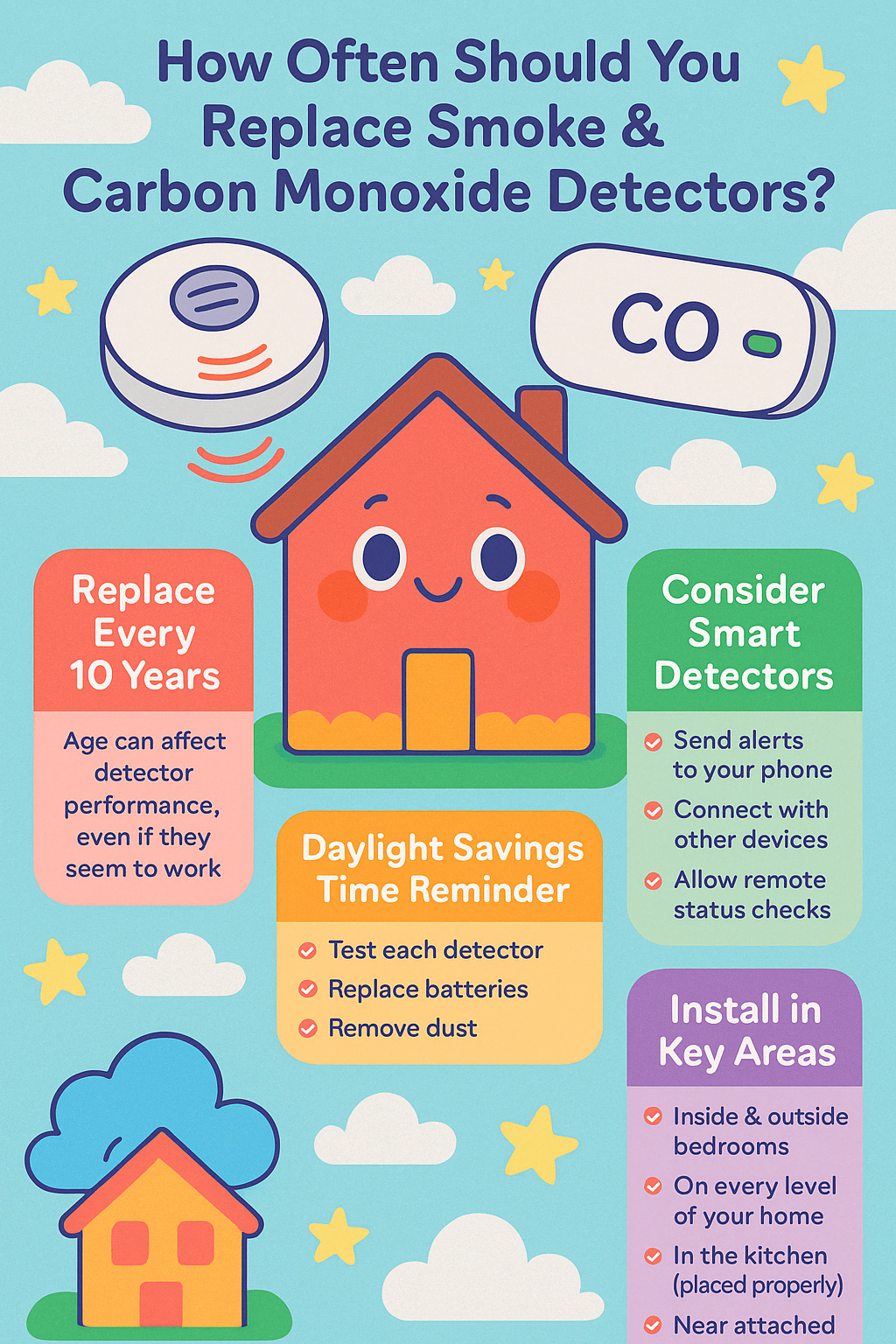
Smoke and carbon monoxide detectors are vital components of home safety. These compact devices provide early warnings during fires or gas leaks, buying you precious time to evacuate and call for help. However, many homeowners are unaware that detectors lose effectiveness over time and need replacement every 5 to 10 years.
At Light It Up Electric, we help homeowners stay protected with expert electrical services, including the installation and maintenance of smoke and CO detectors.
How Often Should Smoke and Carbon Monoxide Detectors Be Replaced?
Over time, the internal sensors of your detectors become less sensitive. Even if your devices seem to work, they may not detect danger fast enough. The National Fire Protection Association (NFPA) recommends replacing:
• Smoke detectors every 10 years
• Carbon monoxide detectors every 5 to 10 years (check manufacturer guidelines)
Not sure how old your device is? Look for the manufacturing date printed on the back. If it’s older than 10 years, it’s time to upgrade.
Use Daylight Saving Time as a Safety Reminder
A great way to stay on top of fire safety is to use Daylight Saving Time as a built-in reminder. When you change your clocks, also:
• Test each detector using the “test” button
• Replace batteries (if not using sealed battery models)
• Vacuum around detectors to remove dust buildup
Consider switching to 10-year sealed battery models for hassle-free protection.
Modern Safety with Smart Smoke and CO Detectors
Smart detectors offer enhanced protection and convenience. These advanced devices can:
• Send alerts to your smartphone
• Integrate with smart lighting for emergency exits
• Allow remote monitoring of battery levels
Installing smart detectors ensures peace of mind, even when you're away from home.
Best Placement for Smoke and CO Detectors
Proper placement is critical to ensure full coverage. Install detectors:
• Inside and outside of every bedroom
• On each level of your home, including basements
• Near attached garages (for CO detection)
• In or near kitchens (but not too close to cooking appliances)
How Smoke and CO Detectors Work
Smoke detectors come in three main types:
• Ionization detectors: Best for fast-flaming fires
• Photoelectric detectors: Best for smoldering fires
• Dual-sensor detectors: Combine both technologies for complete protection
Carbon monoxide detectors utilize sensors such as:
• Electrochemical: Most common, highly accurate
• Biomimetic: Mimic human response to CO exposure
• Metal oxide semiconductors: Affordable, great for general use
Regular Maintenance = Reliable Protection
Keep your detectors in top condition with these tips:
• Test alarms monthly
• Replace batteries annually or when chirping
• Clean devices regularly to prevent dust interference
• Replace any unit over 10 years old
Professional Installation Ensures Safety & Code Compliance
While some detectors can be DIY-installed, professional installation by a licensed electrician guarantees:
• Proper wiring and interconnection
• Optimal placement based on your home layout
• Compliance with local codes and regulations
• Integration with existing security or smart home systems
• Peace of mind through expert maintenance and inspections
Trust the experienced team at Light It Up Electric to assess, install, and maintain your smoke and carbon monoxide detectors. We ensure your system is up-to-date, fully functional, and legally compliant.
Stay Safe and Compliant
Whether you’re a homeowner or a landlord, maintaining reliable smoke and CO detectors is not only critical for safety—it’s often required by law. Avoid liability and protect lives by scheduling regular inspections and timely replacements.
Need help? Contact Light It Up Electric today for expert guidance, installations, or a full safety check-up. Your safety is our priority.

A standard circuit breaker is designed primarily to trip when a circuit draws too much electrical current . A GFCI, on the other hand, is designed to trip when it detects electrical current leaking along an unintended path . That means a true overload is more likely to trip the circuit breaker than the GFCI itself. However, when several appliances or devices are connected at the same time, their combined electrical leakage can sometimes contribute to a GFCI trip. For homeowners and businesses in Frisco, Plano, McKinney, North Dallas, Allen, Carrollton, Lewisville, Prosper, and Celina, TX , Light It Up Electric provides professional GFCI troubleshooting, electrical circuit diagnostics, outlet repair, breaker troubleshooting, and electrical safety inspections . Call Light It Up Electric at 469-261-1503 Visit https://www.lightitupelectric.net
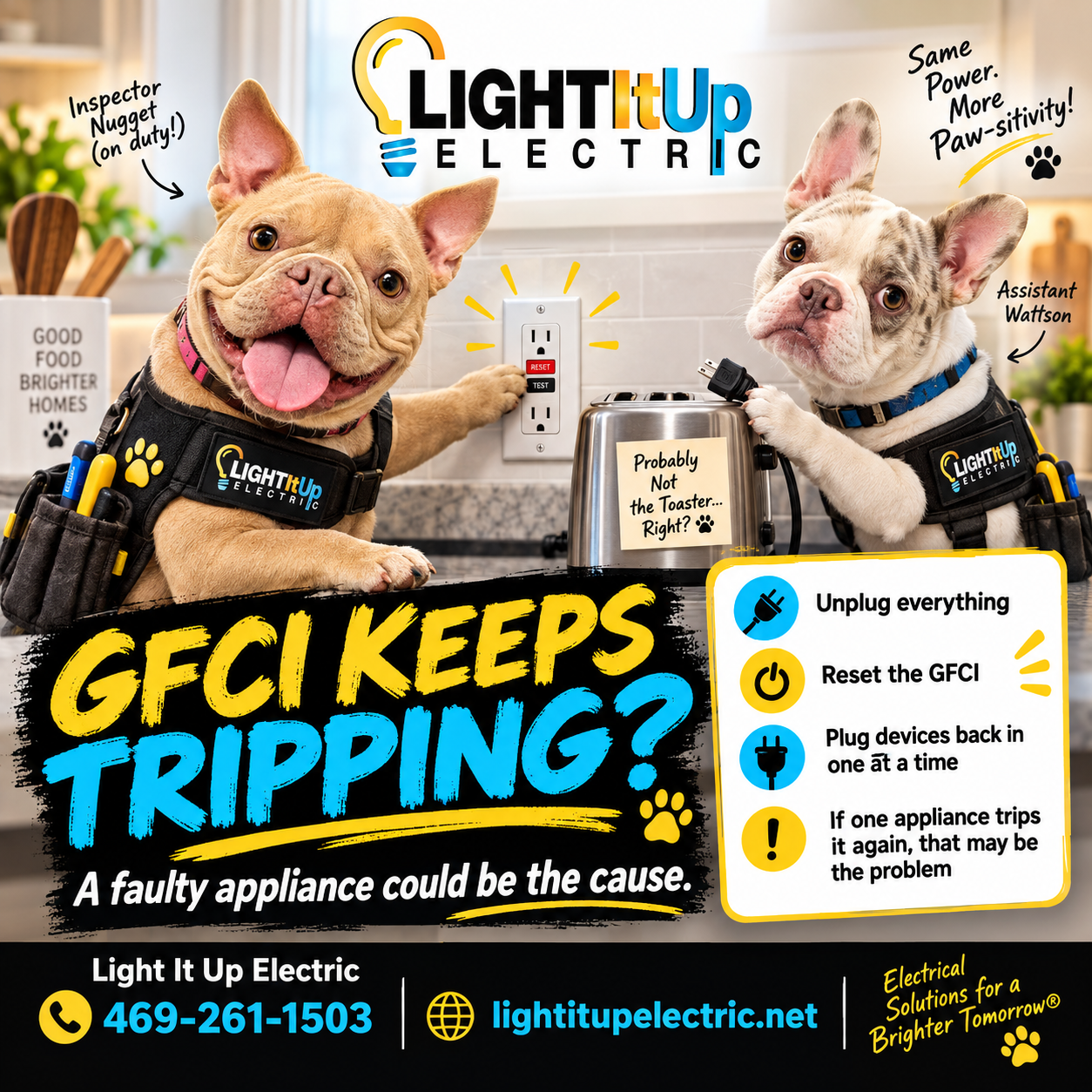
If your GFCI outlet keeps tripping , the problem may not be the outlet itself. A faulty appliance or electrical device connected to the circuit can leak a small amount of electrical current, causing the GFCI to trip and shut off power. That is exactly what a GFCI is designed to do. For homeowners and businesses in Frisco, Plano, McKinney, North Dallas, Allen, Carrollton, Lewisville, Prosper, and Celina, TX , Light It Up Electric provides professional GFCI troubleshooting, electrical diagnostics, outlet repair, appliance circuit testing, and electrical safety inspections . Call Light It Up Electric at 469-261-1503 Visit https://www.lightitupelectric.net

One of the most common reasons a GFCI outlet keeps tripping is moisture . GFCI outlets are designed to detect very small changes in electrical current. When water, condensation, or high humidity creates an unintended path for electricity, the GFCI may shut off power to help reduce the risk of electrical shock.
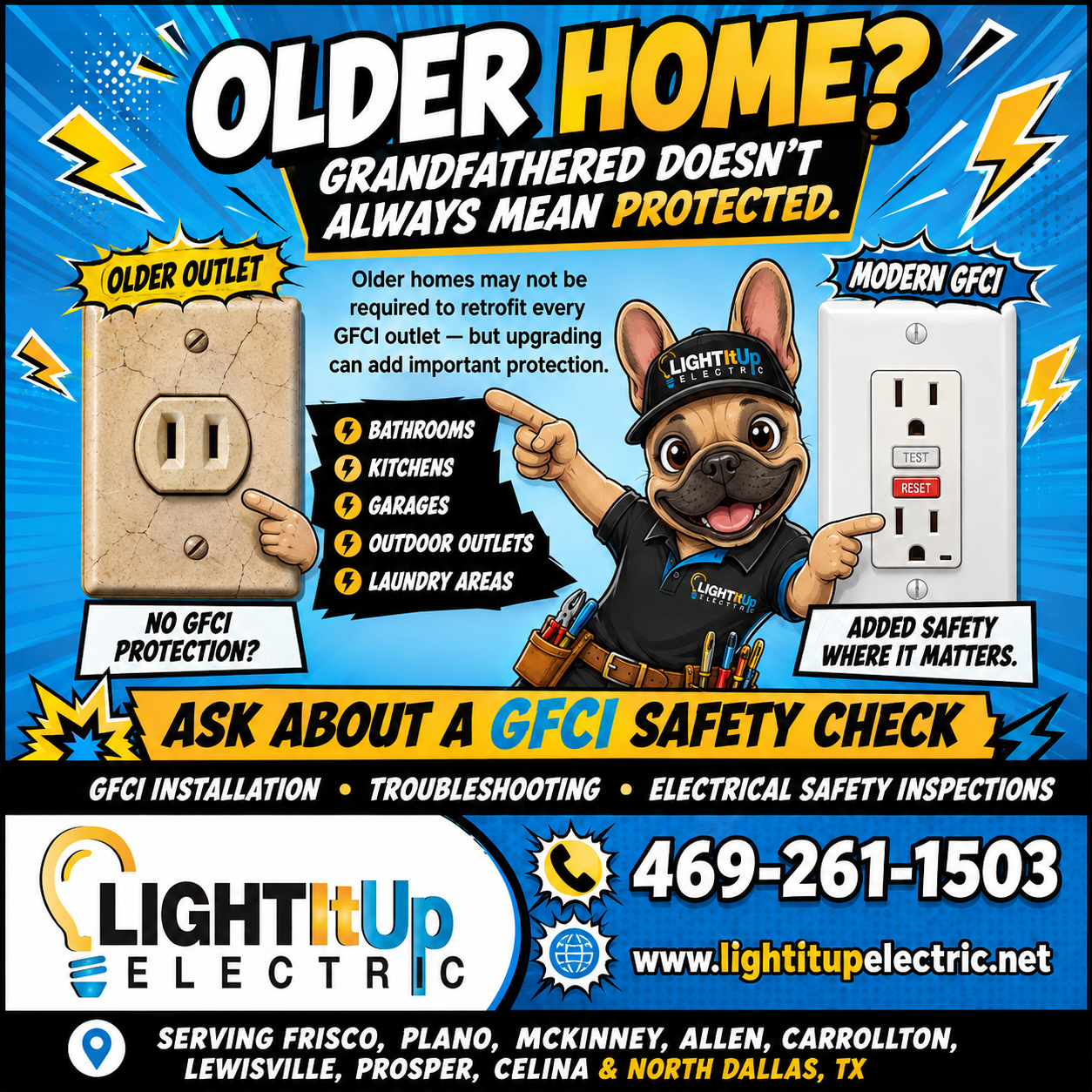
Existing homes generally are not automatically required to retrofit every outlet simply because the National Electrical Code has changed . Electrical requirements usually depend on when the system was installed, whether electrical work is being modified or replaced, local code requirements, and the authority having jurisdiction. But being grandfathered under an older code does not necessarily mean your electrical system offers the level of protection available today. The National Electrical Code establishes minimum safety requirements for electrical installations . As electrical safety standards have evolved, GFCI protection has expanded into more areas of the home. If your older property has never received a comprehensive electrical update, it may be worth having its GFCI protection evaluated. Light It Up Electric provides professional GFCI outlet installation, GFCI breaker installation, electrical troubleshooting, and electrical safety inspections for homeowners and businesses throughout North Texas. Call 469-261-1503 Visit https://www.lightitupelectric.net
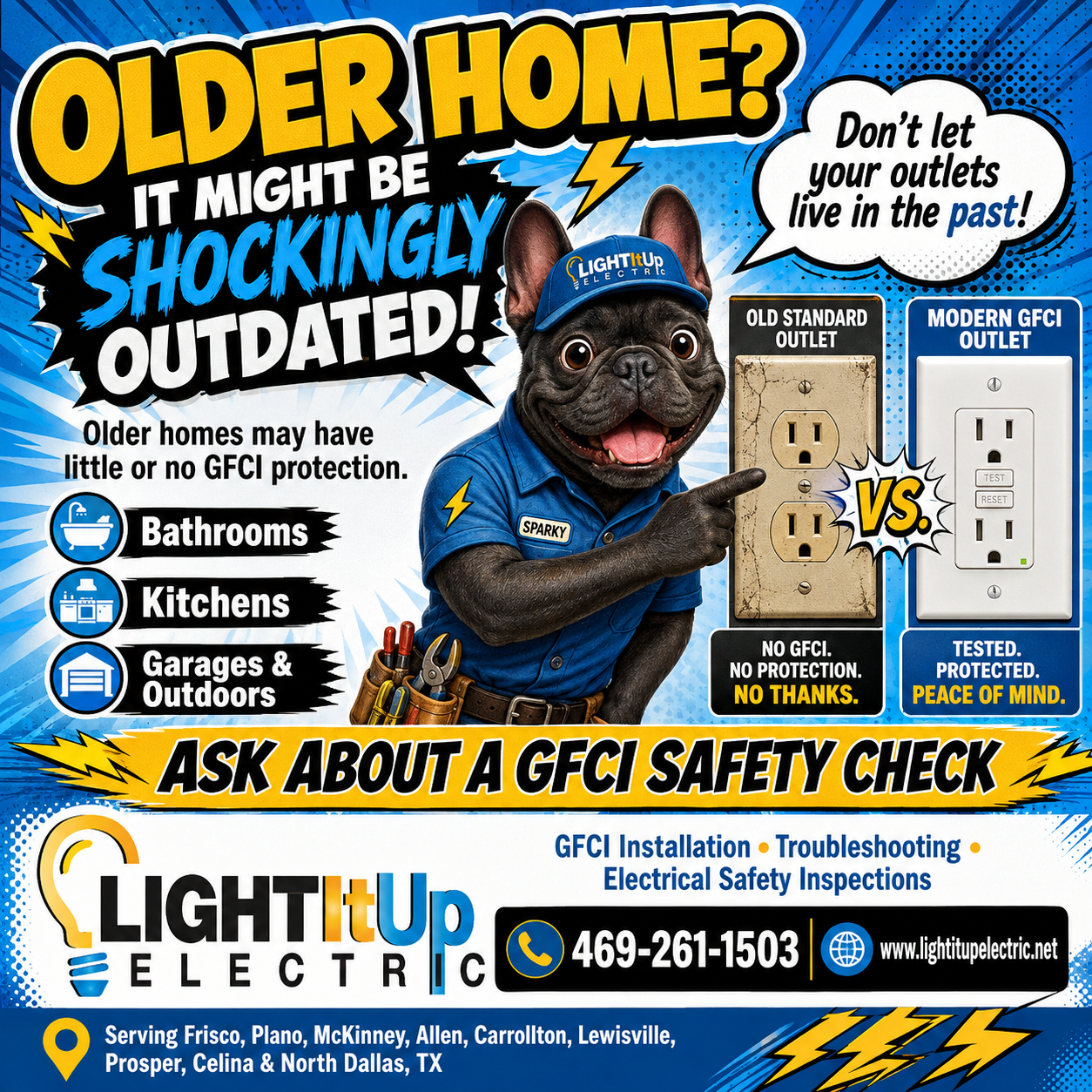
GFCI requirements were added to the National Electrical Code gradually over time. Outdoor receptacles were among the earliest locations to require protection, followed later by bathrooms, garages, kitchens, and other areas. That means many older homes in Frisco, Plano, McKinney, North Dallas, Allen, Carrollton, Lewisville, Prosper, and Celina, TX may still have standard receptacles in locations where modern electrical systems would typically include GFCI protection. If you are unsure whether your home has adequate protection, Light It Up Electric can inspect your electrical system and recommend appropriate upgrades. Call 469-261-1503 Visit https://www.lightitupelectric.net

GFCI protection is required in more areas of a modern home than many homeowners realize. Under the 2023 National Electrical Code, GFCI protection for dwelling-unit receptacles applies to numerous locations where electrical shock hazards may be greater, including bathrooms, garages, outdoor areas, crawl spaces, basements, kitchens, areas near sinks, boathouses, laundry areas, and other damp or wet locations. Texas has adopted the 2023 NEC as the statewide minimum electrical standard for covered electrical work , effective September 1, 2023. Local cities can also have amendments and permitting requirements, so the exact requirements for a property may depend on the local authority having jurisdiction. For homeowners and businesses in Frisco, Plano, McKinney, North Dallas, Allen, Carrollton, Lewisville, Prosper, and Celina, TX , Light It Up Electric provides professional GFCI outlet installation, GFCI breaker installation, electrical troubleshooting, and electrical safety inspections . Call Light It Up Electric at 469-261-1503 Visit https://www.lightitupelectric.net

The National Electrical Code (NEC) establishes minimum electrical safety standards for GFCI protection. Texas currently uses the 2023 National Electrical Code as the minimum standard for electrical work covered by state law , effective September 1, 2023. Municipalities may also have local amendments and permitting requirements, so the exact requirements for a property can depend on the local jurisdiction. For homeowners and businesses in Frisco, Plano, McKinney, North Dallas, Allen, Carrollton, Lewisville, Prosper, and Celina, TX , Light It Up Electric provides professional GFCI outlet installation, GFCI replacement, electrical troubleshooting, and electrical safety inspections . Call Light It Up Electric at 469-261-1503 Visit https://www.lightitupelectric.net
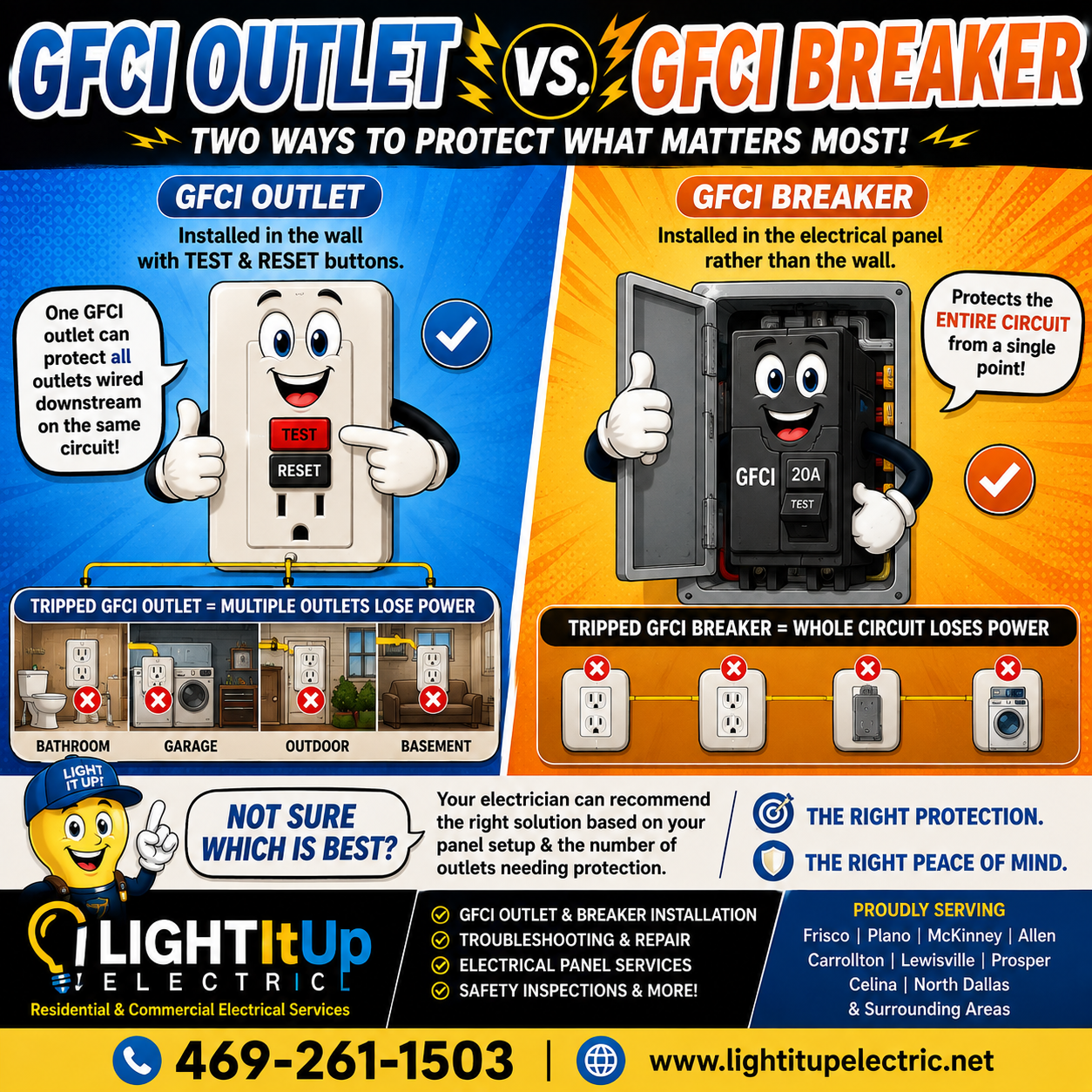
A GFCI breaker provides ground-fault protection from the electrical panel instead of from an individual wall outlet. Unlike a GFCI receptacle with TEST and RESET buttons, a GFCI breaker is installed directly in the breaker panel and can protect the entire branch circuit from one central location . For homeowners and businesses in Frisco, Plano, McKinney, North Dallas, Allen, Carrollton, Lewisville, Prosper, and Celina, TX , a GFCI breaker can be an effective solution when multiple outlets or devices on the same circuit require ground-fault protection. Need help deciding between a GFCI outlet and a GFCI breaker ? Call Light It Up Electric at 469-261-1503 or visit https://www.lightitupelectric.net .
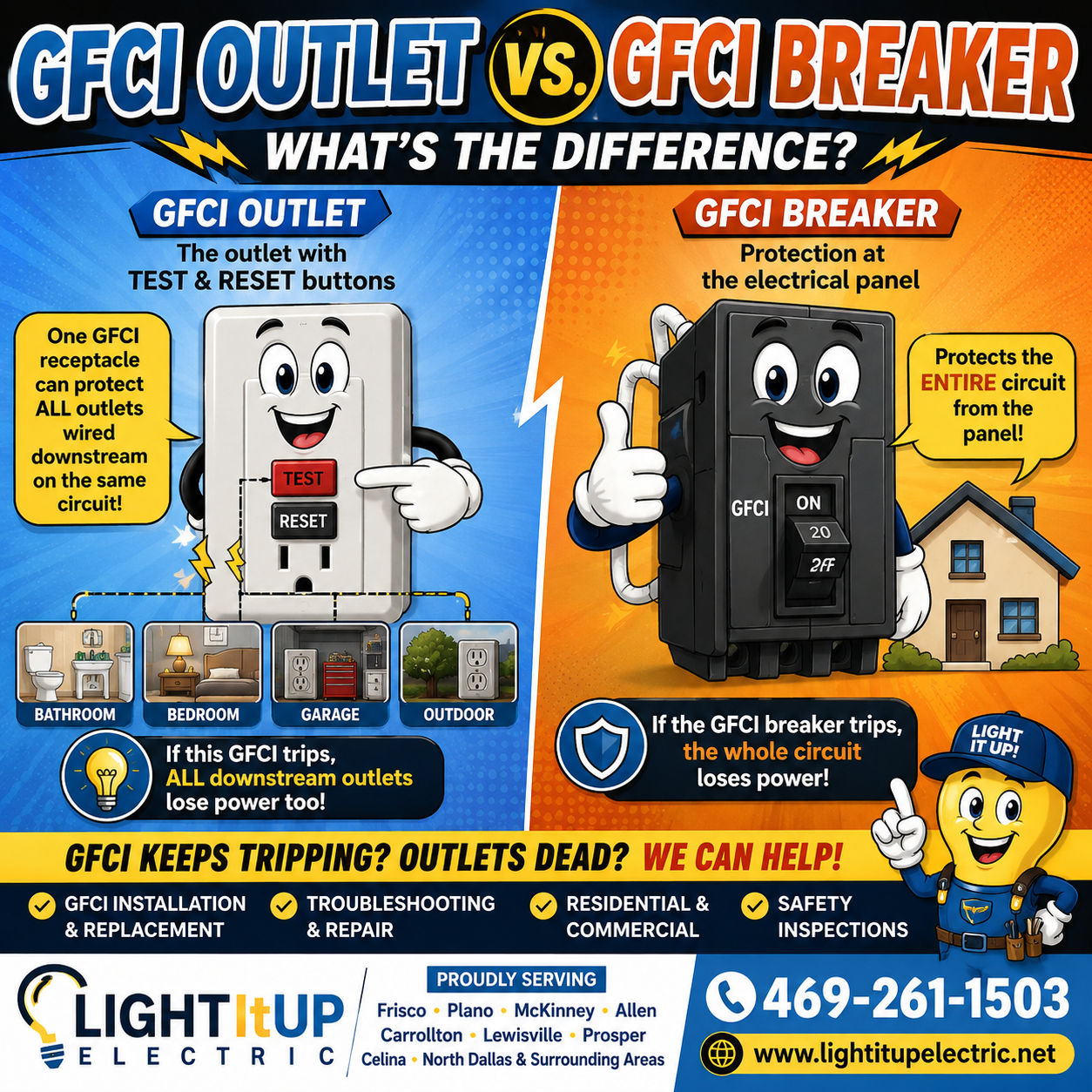
GFCI Outlet vs. GFCI Breaker: What’s the Difference? When homeowners or business owners hear the term GFCI protection , they often think of the familiar outlet with TEST and RESET buttons . But GFCI protection can also be provided by a circuit breaker installed inside the electrical panel. Both are designed to help reduce the risk of electrical shock, but they protect circuits in different ways. For homeowners and businesses in Frisco, Plano, McKinney, North Dallas, Allen, Carrollton, Lewisville, Prosper, and Celina, TX , understanding the difference between a GFCI outlet and a GFCI breaker can make electrical troubleshooting much easier.
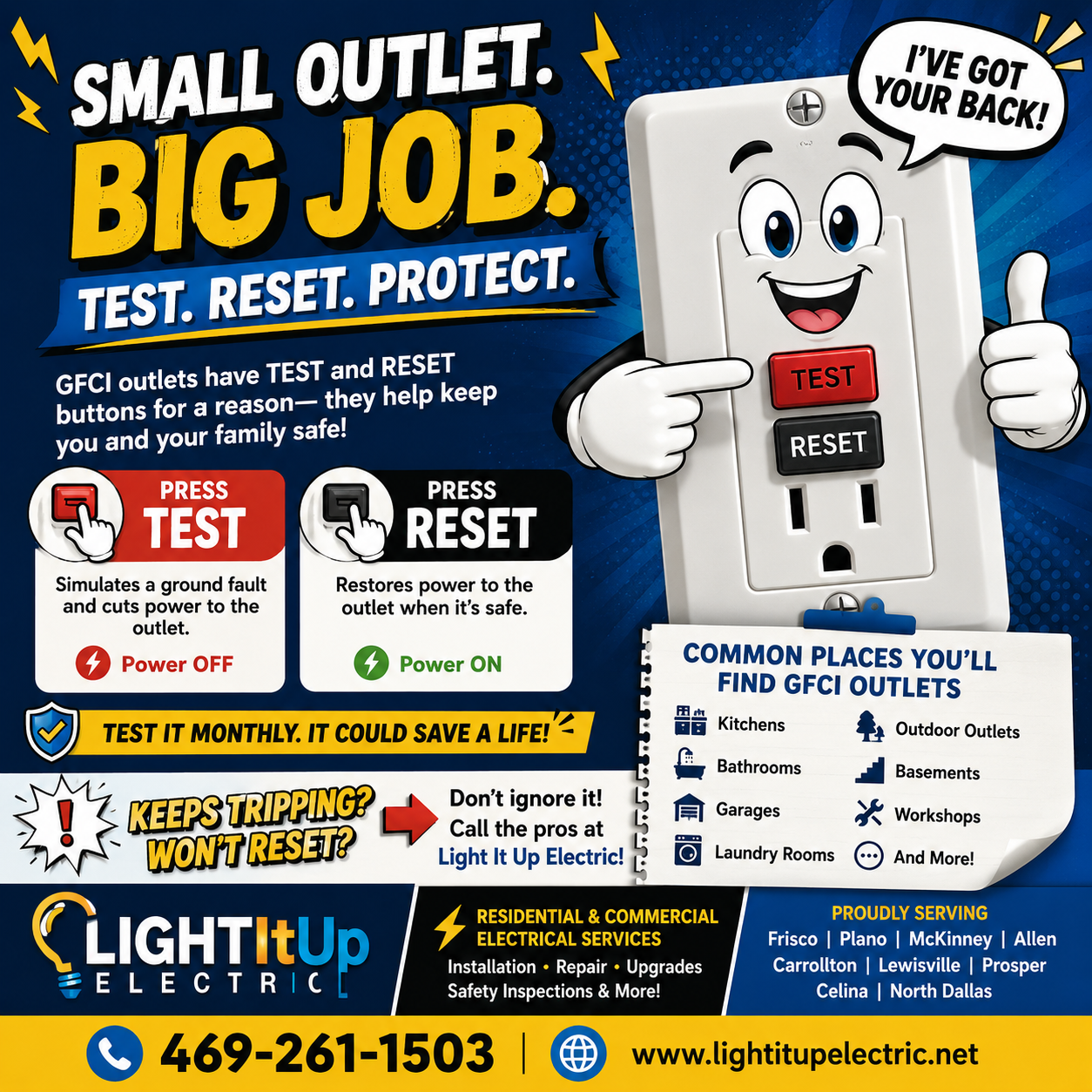
GFCI Outlet TEST & RESET Buttons: What They Do and Why They Matter If you have ever noticed the TEST and RESET buttons on an electrical outlet , you are looking at an important safety feature called a GFCI receptacle , or Ground-Fault Circuit Interrupter.


