


Electrical Upgrades
.
Natasha Guernsey • April 22, 2025
Why Whole-Home Surge Protection Matters
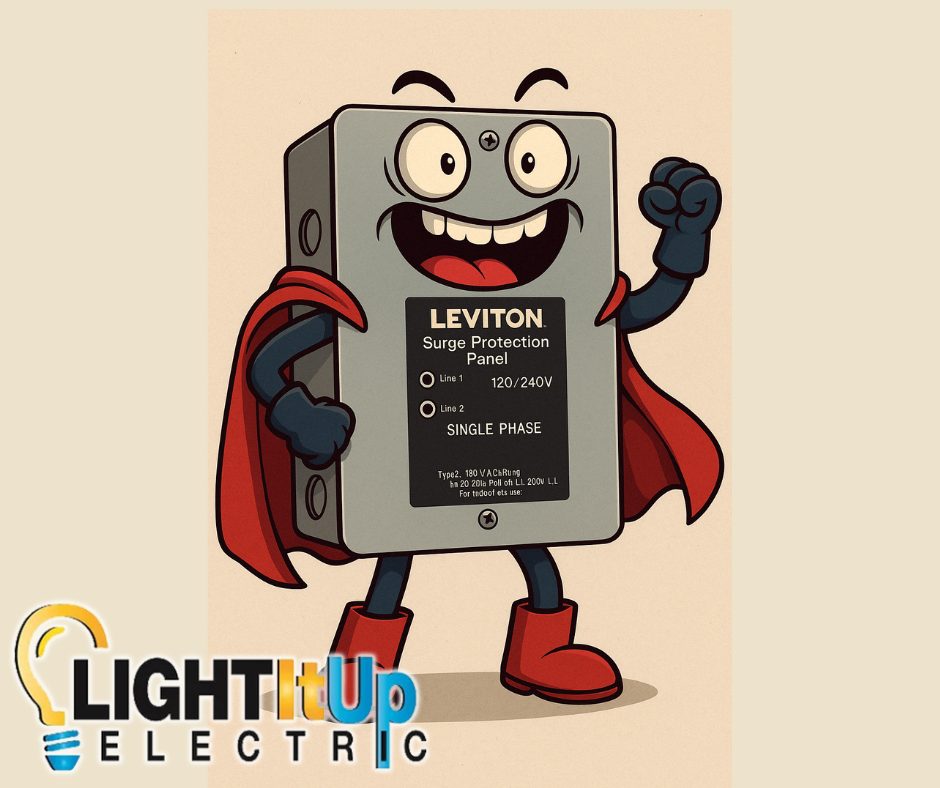
Many homeowners mistakenly believe that power strips provide sufficient surge protection. In reality, they only shield individual devices. For full protection, especially from high-voltage events, whole-home surge protectors are the gold standard.
________________________________________
What Causes Power Surges?
Power surges are brief but intense spikes in voltage that can destroy electrical devices. Common causes include:
• Downed or damaged power lines
• Heavy equipment in nearby factories
• Cycling of high-power appliances
• Lightning strikes
Some surges cause instant damage; others degrade devices over time—leading to unexpected failure.
________________________________________
How Surge Protectors Work
Surge protectors use a metal oxide varistor (MOV) to divert excess voltage safely into the ground. This prevents spikes from reaching your appliances and electrical system.
________________________________________
Benefits of Whole-Home Surge Protectors
✅ Comprehensive Protection
They guard every device and the entire electrical system—including HVACs, refrigerators, and outlets—from surges..
✅ Customized for Your Home
Homes have different voltage needs. Modern protectors are tailored for old vs. new construction and often come with warranties.
✅ Protects Smart Tech
New homes filled with smart devices require broader protection. Whole-home units handle all circuits, offering peace of mind during storms or outages.
________________________________________
Pros & Cons
✅ Pros
• Full-System Coverage: Protects wiring, switches, and all connected appliances.
• Prevents Fires: Stops surges that could cause sparks or shorts.
• Financial Protection: Avoid replacing high-cost electronics; insurance rarely covers surge damage.
❌ Cons
• Higher Upfront Cost: $300–$600 for the unit + $100–$300 for installation.
• Needs Professional Install: Must be wired into the main panel by an electrician.
• Requires Proper Grounding: Your home’s grounding system must be up to code for optimal performance.
________________________________________
Do You Need More Than One?
In high-risk areas (frequent storms or poor utility infrastructure), multiple protectors across your system can add an extra layer of defense.
________________________________________
Conclusion: Is It Worth It?
Yes. While power strips help protect individual devices, whole-home surge protectors offer unmatched coverage. For homes with modern appliances and sensitive electronics, the investment brings long-term protection, reduced risk, and peace of mind.
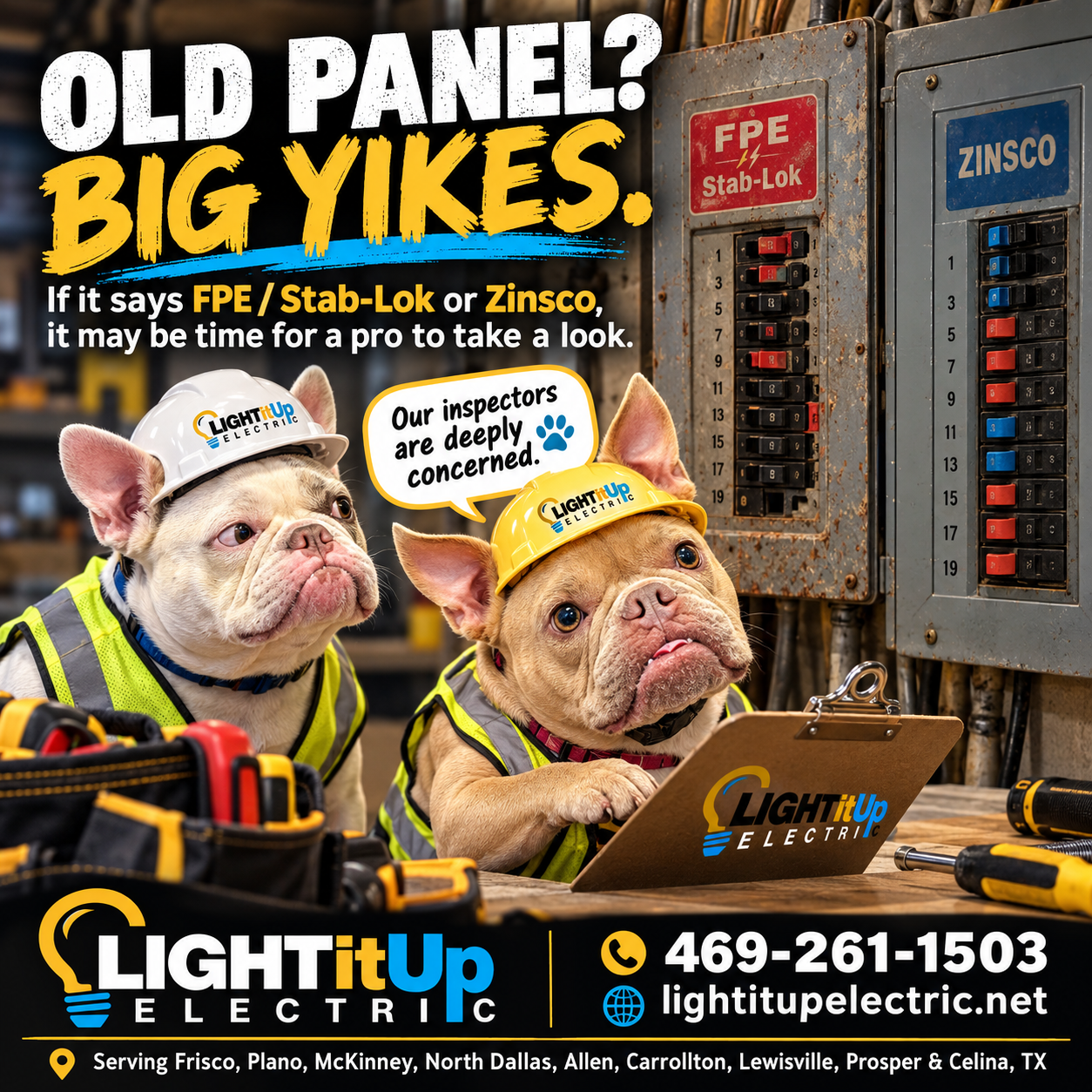
If your home or business still has a Federal Pacific Electric (FPE) Stab-Lok panel or an older Zinsco electrical panel , it is worth having the equipment professionally evaluated. Federal Pacific Stab-Lok breakers have been the subject of safety concerns for decades. The U.S. Consumer Product Safety Commission (CPSC) investigated Federal Pacific Electric Stab-Lok circuit breakers for approximately two years before closing its investigation in 1983. Importantly, the agency did not conclude that the breakers were safe. CPSC testing confirmed that some FPE breakers failed certain Underwriters Laboratories calibration requirements designed to verify that breakers trip properly during electrical overloads. Later published testing has also documented significant failure-to-trip rates among some FPE Stab-Lok breakers. For homeowners and businesses in Frisco, Plano, McKinney, North Dallas, Allen, Carrollton, Lewisville, Prosper, and Celina, TX , an older FPE or Zinsco panel should not simply be ignored because it has “worked fine so far.” 📞 Call Light It Up Electric: 469-261-1503 🌐 https://www.lightitupelectric.net
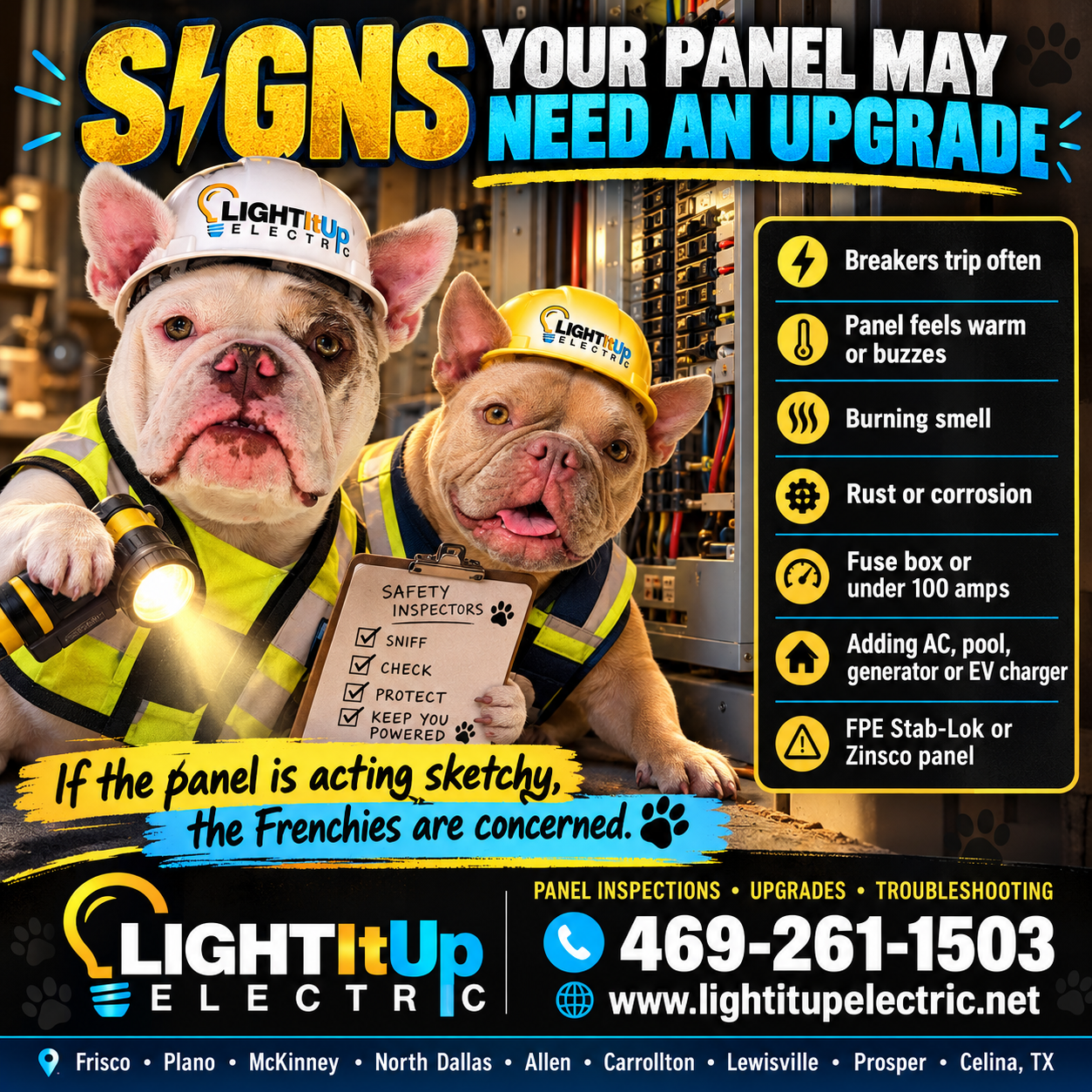
Your electrical panel is the heart of your home or business electrical system. It distributes power throughout the property and helps protect wiring and circuits from overloads. As electrical demand increases, an older or undersized panel may no longer be the best fit for your property. If you are a homeowner or business owner in Frisco, Plano, McKinney, North Dallas, Allen, Carrollton, Lewisville, Prosper, or Celina, TX , here are some of the most common warning signs that your electrical panel may need to be inspected, repaired, or upgraded. 📞 Call Light It Up Electric: 469-261-1503 🌐 https://www.lightitupelectric.net
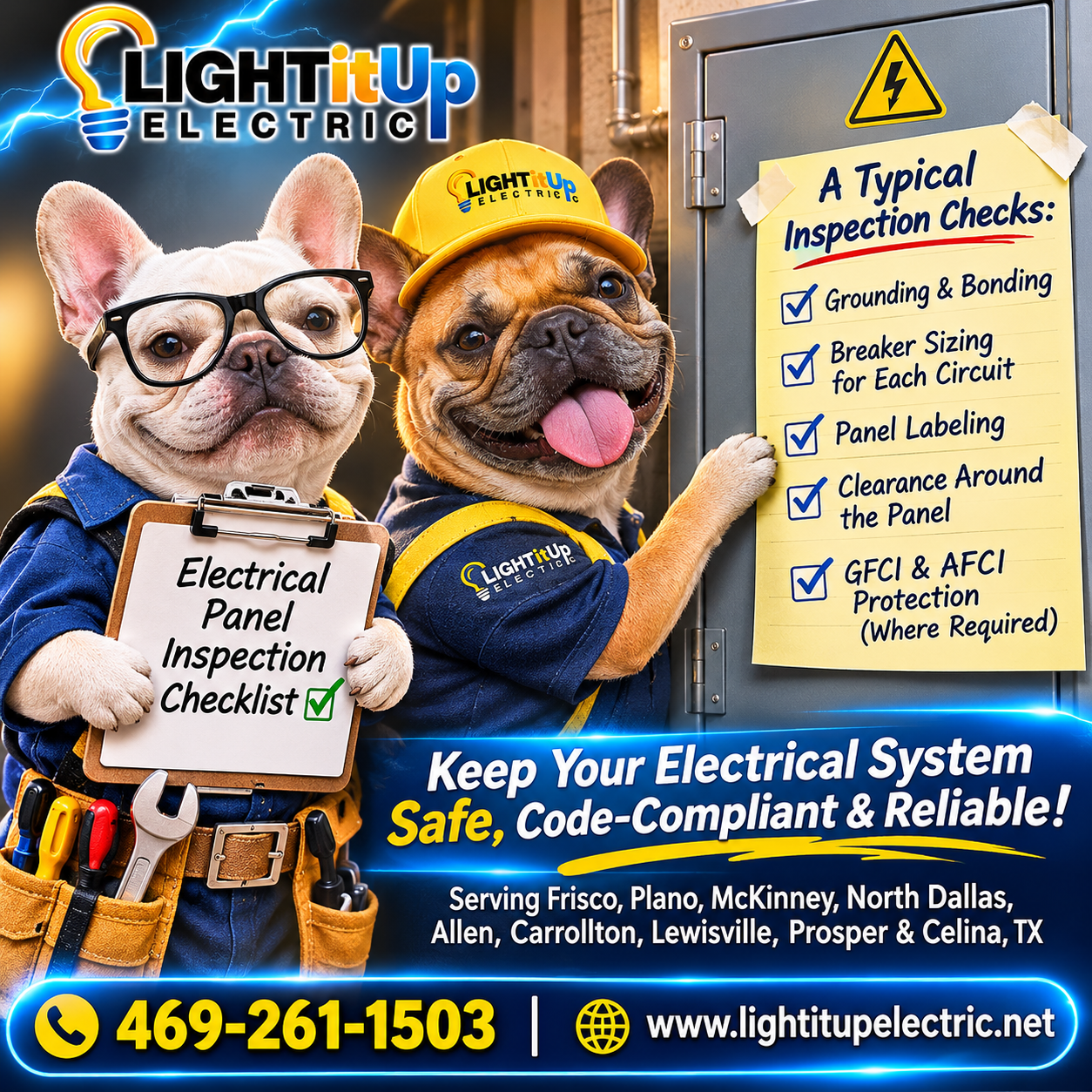
A professional electrical panel inspection looks at more than whether the breakers turn on and off. The goal is to identify installation problems, overheating risks, improper breaker protection, grounding issues, labeling problems, and other conditions that may affect the safety and reliability of your electrical system. For homeowners and businesses in Frisco, Plano, McKinney, North Dallas, Allen, Carrollton, Lewisville, Prosper, and Celina, TX , an electrical panel inspection can be especially helpful when you are experiencing repeated breaker trips, planning an electrical upgrade, buying or remodeling a property, or adding new equipment such as an EV charger, pool, spa, or HVAC system. 📞 Call Light It Up Electric: 469-261-1503 🌐 https://www.lightitupelectric.net

Our two Frenchies take their pumpkin inspections very seriously. Electrical inspections? We leave those to the licensed professionals! 🍂 The Light It Up Electric Advantage Membership helps homeowners stay ahead of hidden electrical issues with a comprehensive annual 18-point safety inspection.
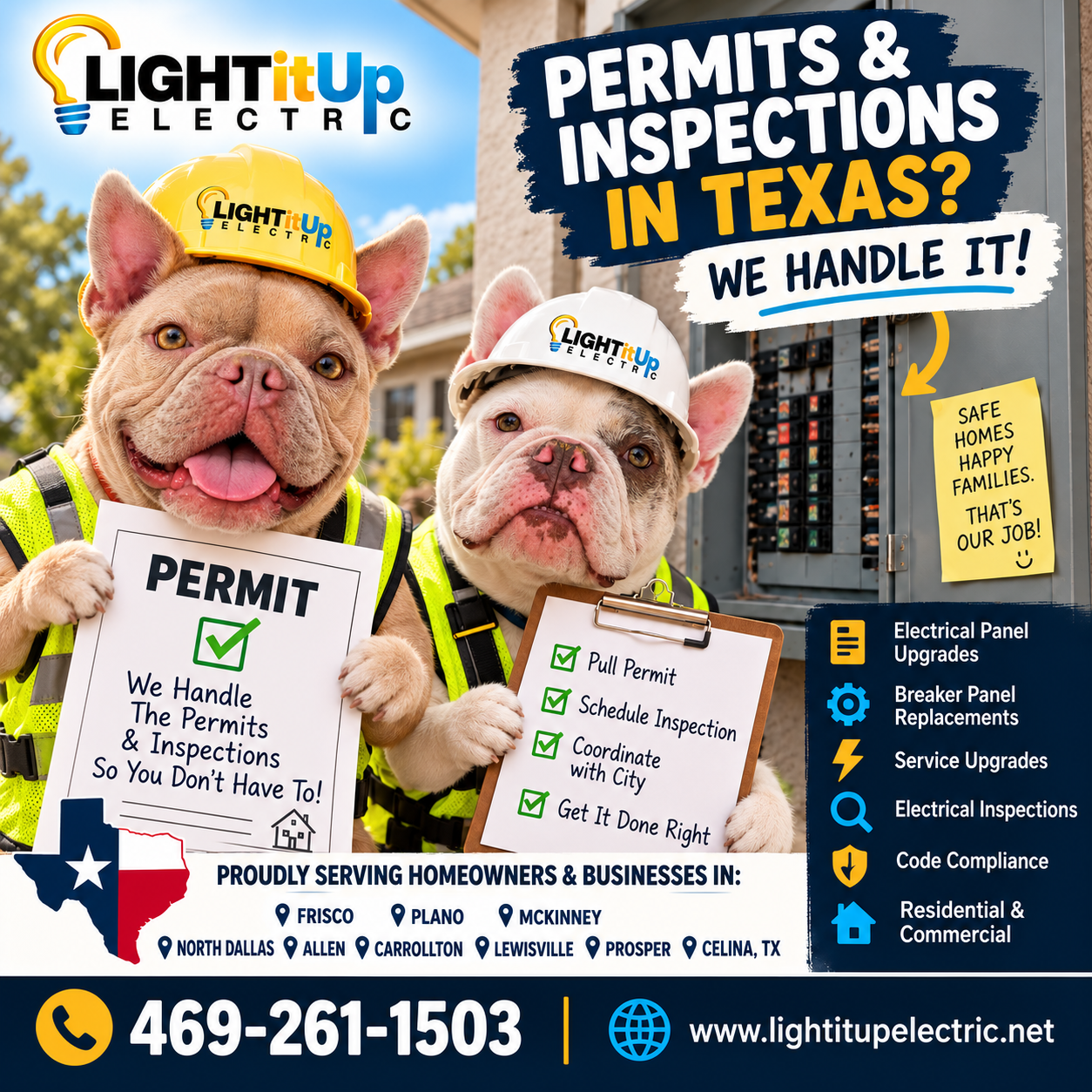
If you are planning an electrical panel upgrade, breaker panel replacement, 200-amp service upgrade, or electrical service replacement in North Texas, permits and inspections are an important part of the process. In Texas, electrical permitting and inspection requirements are generally handled by the local authority having jurisdiction , such as your city, county, or regional inspecting authority. Requirements can vary depending on the property location and scope of work. For homeowners and businesses in Frisco, Plano, McKinney, North Dallas, Allen, Carrollton, Lewisville, Prosper, and Celina, TX , a licensed electrical contractor can help determine the permits, inspections, and utility coordination required for your project. 📞 Call Light It Up Electric: 469-261-1503 🌐 https://www.lightitupelectric.net
Electrical problems are more than an inconvenience—they can become a serious safety concern. According to the National Fire Protection Association (NFPA) , electrical failures or malfunctions are involved in a significant share of home structure fires in the United States. Problems involving electrical distribution equipment, wiring, connections, breakers, and aging components can all contribute to electrical fire risk.
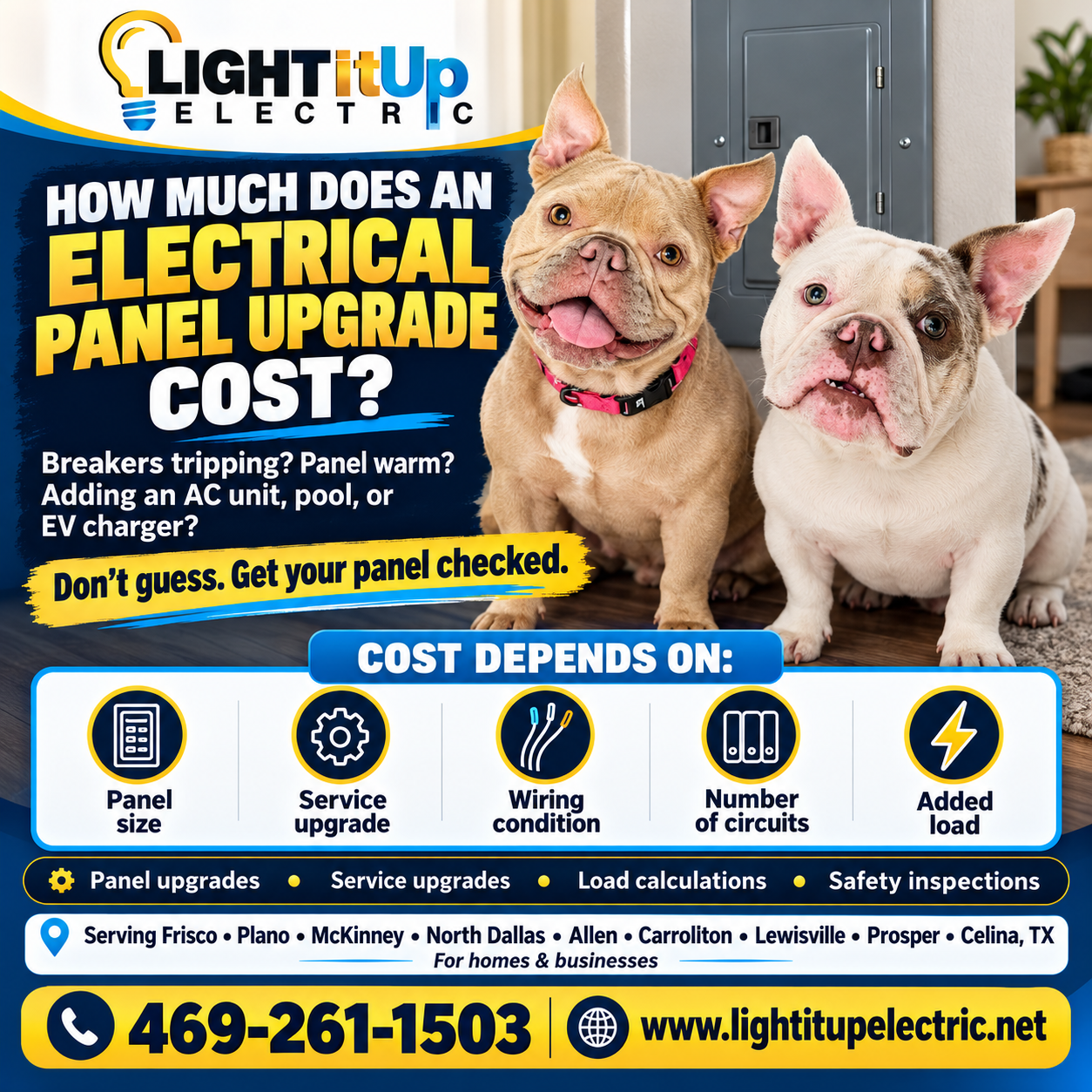
Your circuit breaker keeps tripping . Your electrical panel feels warm to the touch . Maybe you are planning to install a new air conditioner, swimming pool, hot tub, home addition, or EV charger and you are wondering whether your existing electrical system can handle the additional load.

But their favorite harvest find? A way to help their humans plan ahead for electrical safety!
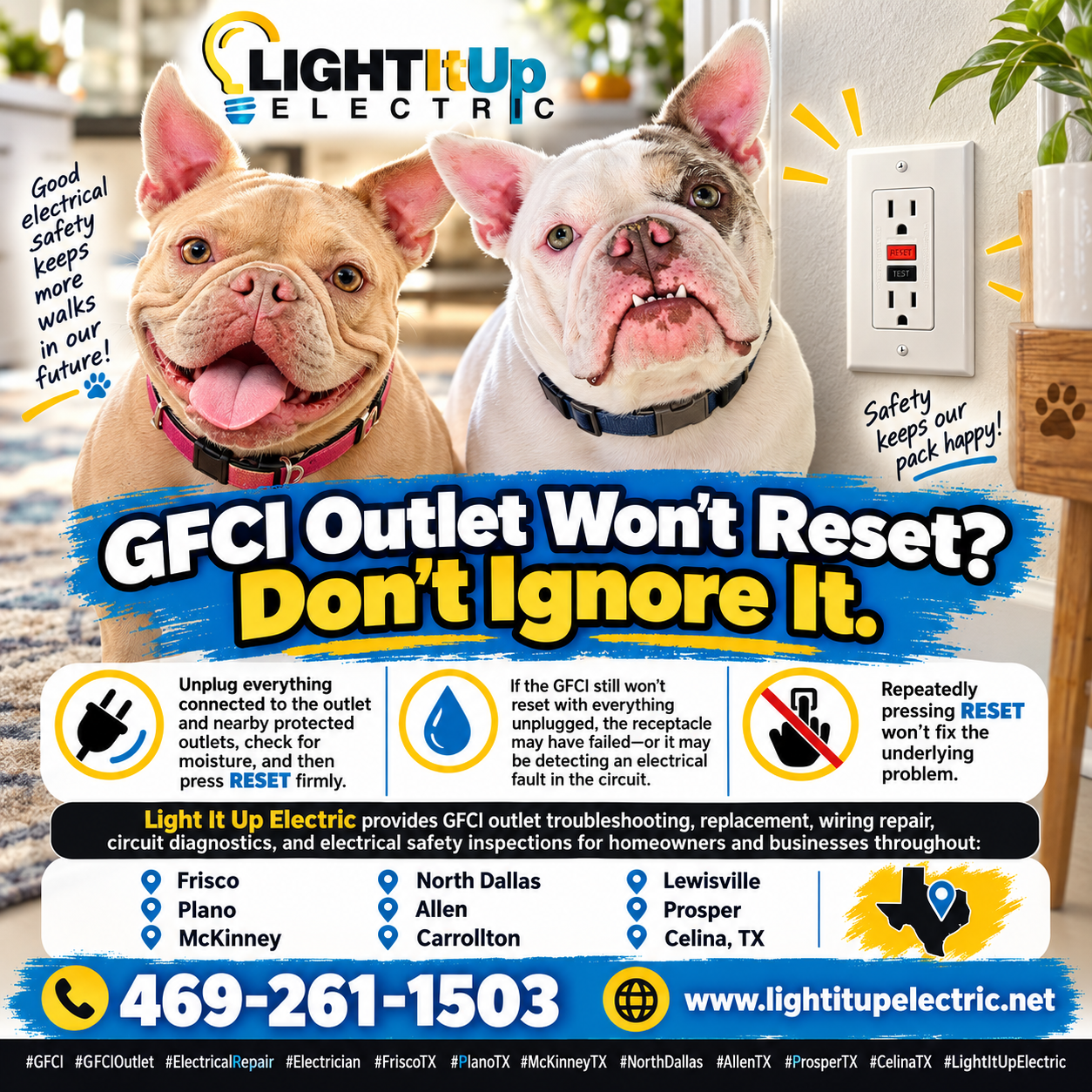
If your GFCI outlet will not reset , unplug everything connected to the outlet and any nearby outlets that may be protected by the same GFCI circuit. Check the outlet and surrounding area for water or moisture . If moisture is present, allow the area to dry completely before attempting another reset.
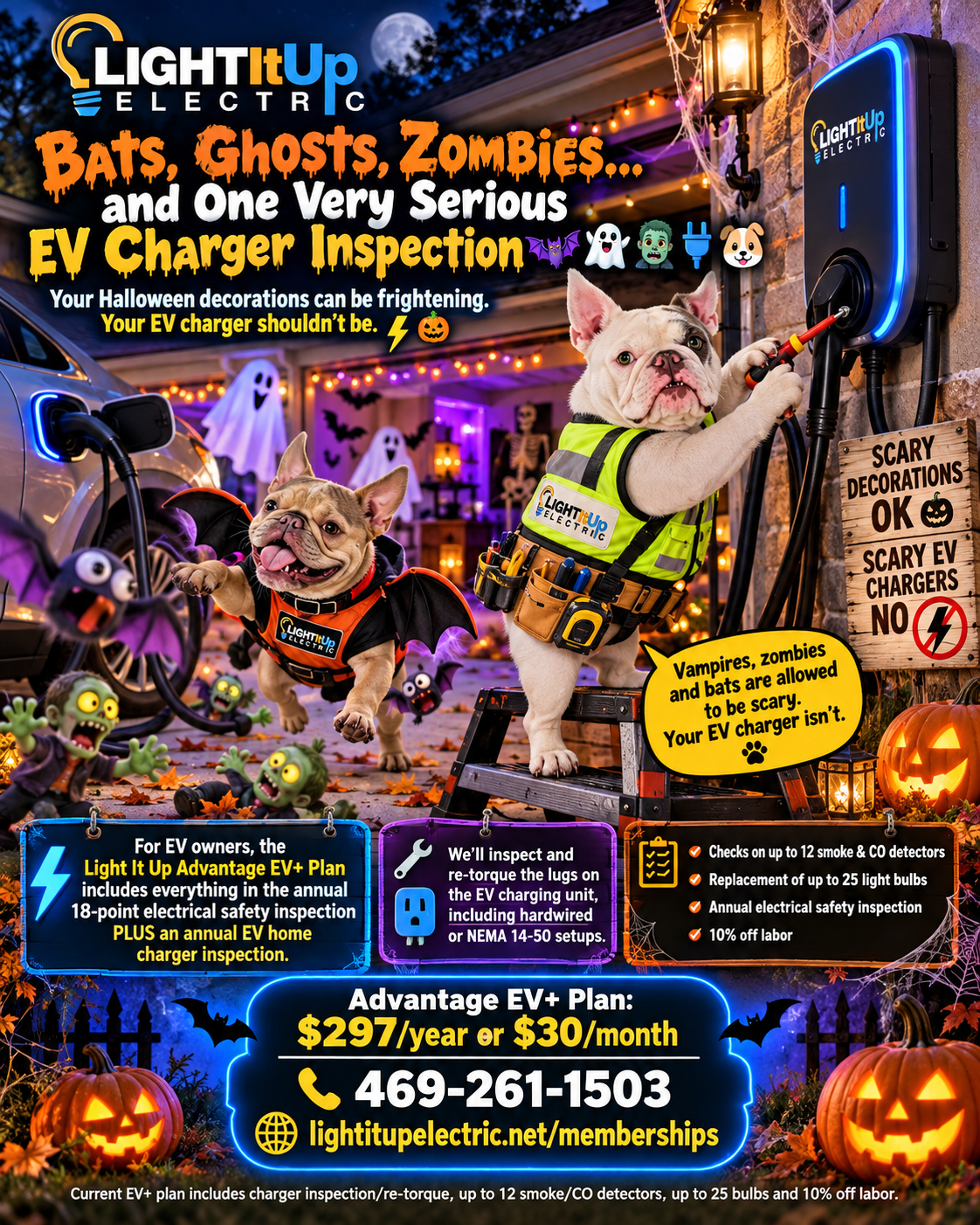
Your Halloween decorations can be frightening. Your EV charger shouldn’t be. ⚡🎃 For EV owners, the Light It Up Advantage EV+ Plan includes everything in the annual 18-point electrical safety inspection PLUS an annual EV home charger inspection .


