


Electrical Upgrades
.
Natasha Guernsey • April 9, 2025
Why Your Circuit Breaker Keeps Tripping (And How to Fix It)
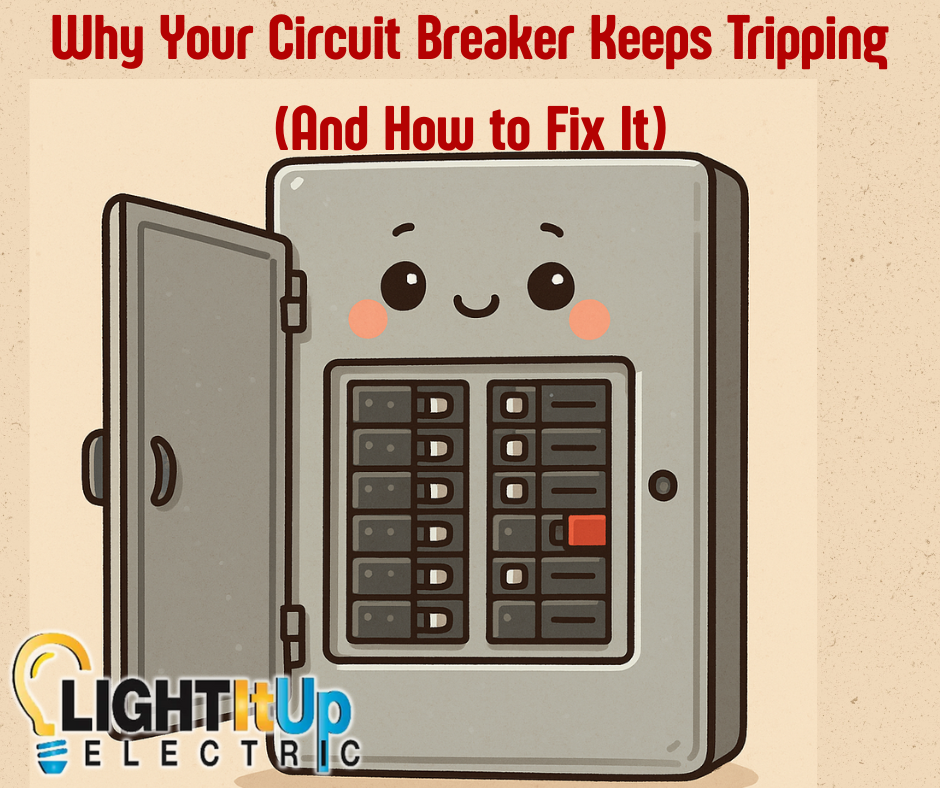
A single tripped breaker can pause your movie night—but when it keeps happening, it’s more than an inconvenience. If your circuit breaker keeps tripping, it's a clear warning that something is wrong in your electrical system. Ignoring the issue could lead to electrical fires, damaged appliances, or costly repairs.
Let’s break down the common causes of circuit breaker trips and what you can do about them.
________________________________________
🔥 1. Overheating Appliances
High-energy appliances such as refrigerators, dryers, ovens, or washing machines can sometimes trip your circuit breaker. If they overheat or pull more power than the circuit can handle, it’s a safety risk.
Signs of appliance overheating:
• The device feels unusually hot to the touch.
• It shuts off mid-cycle.
• Your breaker trips during use.
How to Prevent Appliance Trips:
• Clean appliances regularly (especially vents and filters).
• Inspect outlets for signs of overload (soot, sparks).
• Avoid using multiple high-power devices on the same outlet.
• Check and maintain your refrigerator’s condenser coils.
________________________________________
⚡ 2. Overloaded Circuits
An overloaded circuit occurs when too many devices are connected to a single breaker, drawing more power than it’s rated for.
Common warning signs:
• Flickering lights
• Burning smells
• Buzzing or humming sounds
• Warm outlets or plugs
Fixing an Overloaded Circuit:
• Turn off all devices on the affected circuit.
• Locate and reset the tripped breaker.
• Plug items back in one at a time and monitor for trips.
• Move heavy-load appliances to different circuits.
• Avoid using multiple high-wattage devices simultaneously.
Pro Tip: Consider hiring a licensed electrician to install a dedicated circuit for major appliances.
________________________________________
⚠️ 3. Short Circuits
A short circuit happens when a hot wire comes into direct contact with a neutral or another hot wire, creating an unexpected surge of current. This can cause your breaker to trip immediately and may even lead to electrical fires.
What Causes a Short Circuit?
• Damaged or chewed wires (from pests like rats)
• Faulty appliances with worn-out parts
• Loose connections inside outlets or light fixtures
What You Can Do:
• Reset the breaker after unplugging all devices.
• If it trips immediately, there’s a deeper issue.
• Test devices and switches one by one to identify the problem.
Important: Short circuits are dangerous. Always call a licensed electrician to handle electrical repairs.
________________________________________
🌊 4. Ground Faults
What is a ground fault? It’s when a hot wire touches a grounded component (like a metal box or water pipe). This unintentional contact can cause serious shocks and will trip your GFCI or standard breaker.
Causes of Ground Faults:
• Water exposure in outlets or appliances
• Worn or damaged insulation on wires
• Malfunctioning appliances
How to Fix It:
• This isn’t a DIY job. Ground faults pose serious shock hazards.
• Contact a professional electrician to inspect and repair the system safely.
________________________________________
🛠️ How to Know If Your Circuit Breaker Is Failing
Sometimes the issue isn’t your appliances or wiring—it’s the breaker itself. Breakers wear out over time and can go bad.
Signs of a failing breaker:
• It trips frequently for no clear reason
• You smell something burning from the panel
• The breaker feels hot
• You see burn marks or melted plastic
• The panel hasn’t been serviced in 10+ years
________________________________________
✅ How to Reset a Tripped Breaker Safely
1. Open your electrical panel and look for a breaker that’s between “On” and “Off.”
2. Flip it to “Off” first, then back “On.”
3. Always stand to the side and turn your face away while resetting (to avoid arc flash injuries).
________________________________________
🔎 Troubleshooting a Circuit Breaker That Keeps Tripping
Step 1: Check for an overload.
• Unplug all devices and reset the breaker.
• Plug items in one at a time to see what causes the trip.
Step 2: Test for appliance short circuits.
• Try the suspect appliance on another circuit. If it trips there too, it’s likely faulty.
Step 3: Investigate wiring problems.
• If the breaker trips immediately with no devices plugged in, it’s likely a wiring issue.
• Look for burn marks, buzzing, or odors—these are signs to call a pro.
________________________________________
👨🔧 When to Call a Licensed Electrician
Don’t take risks with your home’s electrical system. If your breaker keeps tripping and you’re unsure why, it’s time to call a professional. A certified electrician can:
• Identify hidden wiring issues
• Repair or replace faulty breakers
• Install dedicated circuits for appliances
• Ensure your home’s electrical system is up to code
________________________________________
📈 Final Thoughts: Stay Safe, Stay Powered
Understanding why circuit breakers trip helps protect your home from fires, shocks, and damage. Whether it’s an overload, short circuit, or ground fault, fixing the root cause ensures the safety and reliability of your electrical system.
________________________________________
Looking for a reliable electrician? Contact our certified team here at Light It Up Electric for expert help with circuit breaker repairs, inspections, and installations.
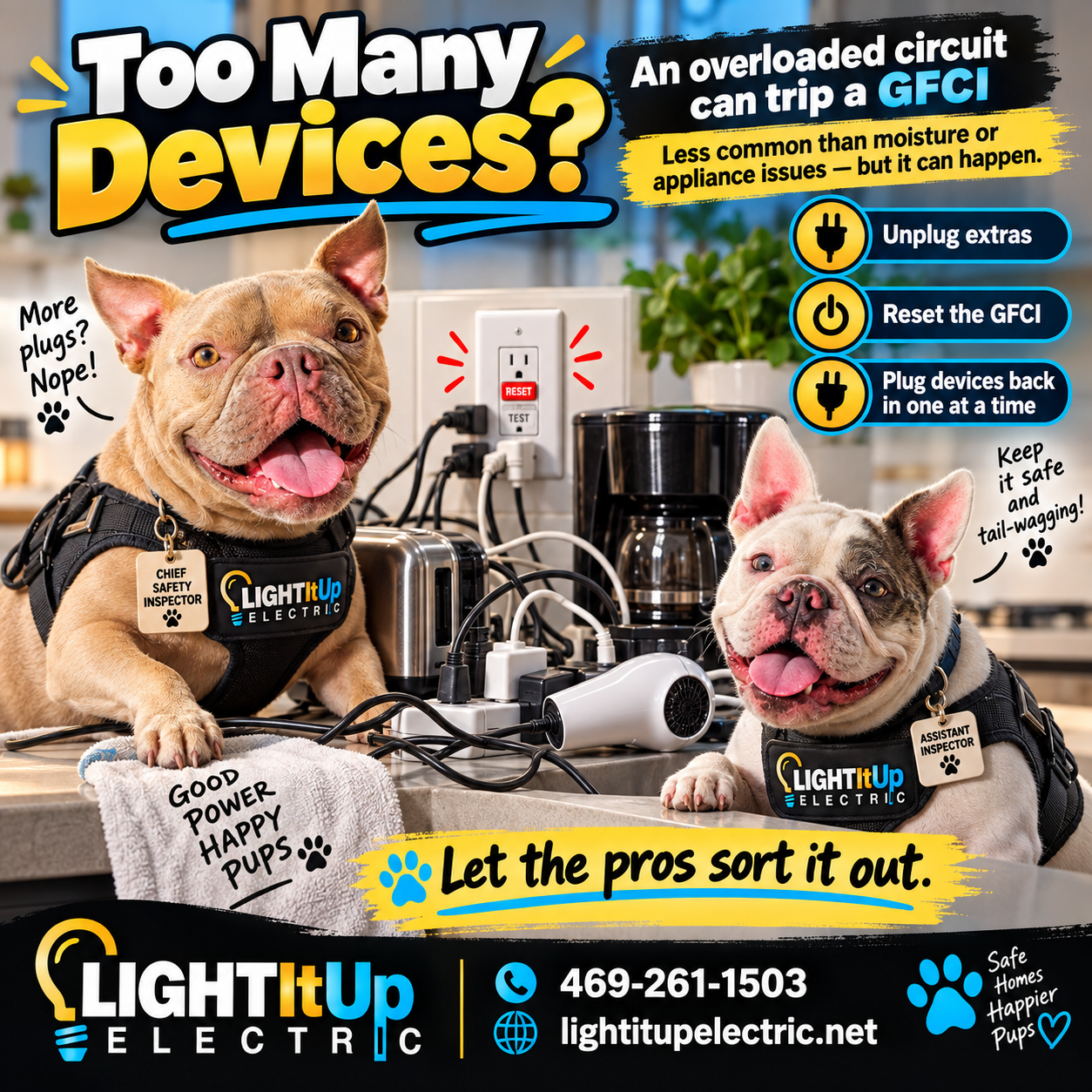
A standard circuit breaker is designed primarily to trip when a circuit draws too much electrical current . A GFCI, on the other hand, is designed to trip when it detects electrical current leaking along an unintended path . That means a true overload is more likely to trip the circuit breaker than the GFCI itself. However, when several appliances or devices are connected at the same time, their combined electrical leakage can sometimes contribute to a GFCI trip. For homeowners and businesses in Frisco, Plano, McKinney, North Dallas, Allen, Carrollton, Lewisville, Prosper, and Celina, TX , Light It Up Electric provides professional GFCI troubleshooting, electrical circuit diagnostics, outlet repair, breaker troubleshooting, and electrical safety inspections . Call Light It Up Electric at 469-261-1503 Visit https://www.lightitupelectric.net
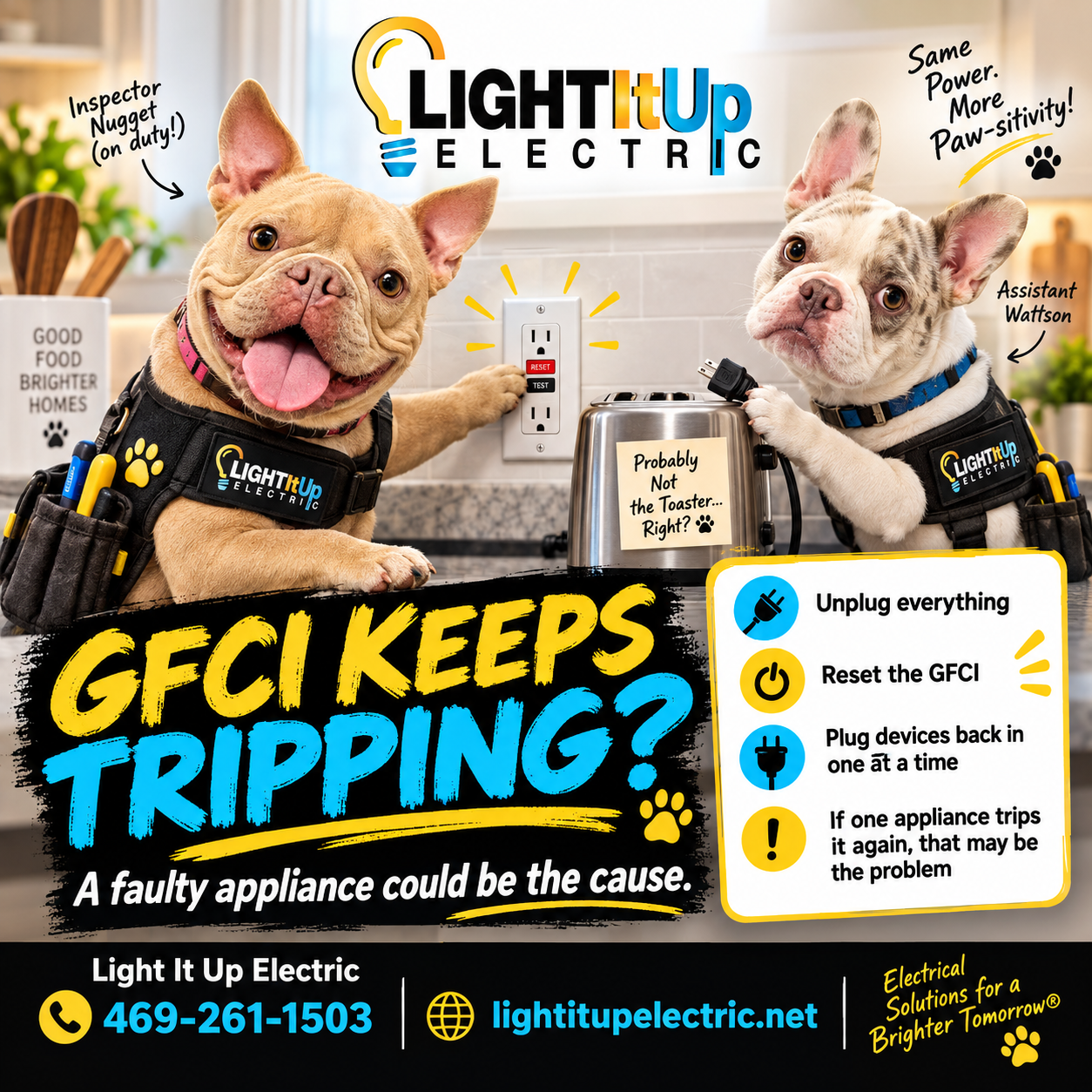
If your GFCI outlet keeps tripping , the problem may not be the outlet itself. A faulty appliance or electrical device connected to the circuit can leak a small amount of electrical current, causing the GFCI to trip and shut off power. That is exactly what a GFCI is designed to do. For homeowners and businesses in Frisco, Plano, McKinney, North Dallas, Allen, Carrollton, Lewisville, Prosper, and Celina, TX , Light It Up Electric provides professional GFCI troubleshooting, electrical diagnostics, outlet repair, appliance circuit testing, and electrical safety inspections . Call Light It Up Electric at 469-261-1503 Visit https://www.lightitupelectric.net
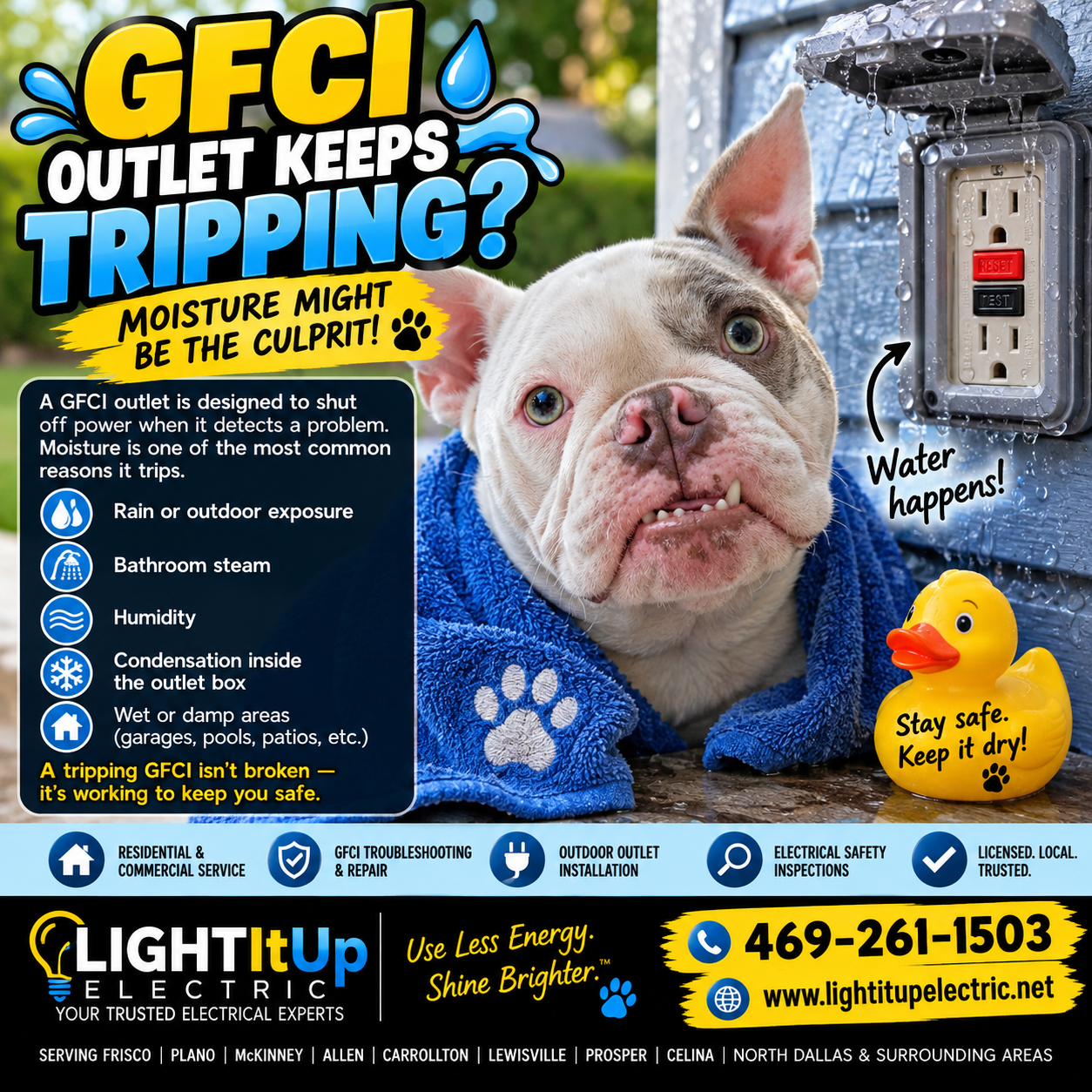
One of the most common reasons a GFCI outlet keeps tripping is moisture . GFCI outlets are designed to detect very small changes in electrical current. When water, condensation, or high humidity creates an unintended path for electricity, the GFCI may shut off power to help reduce the risk of electrical shock.
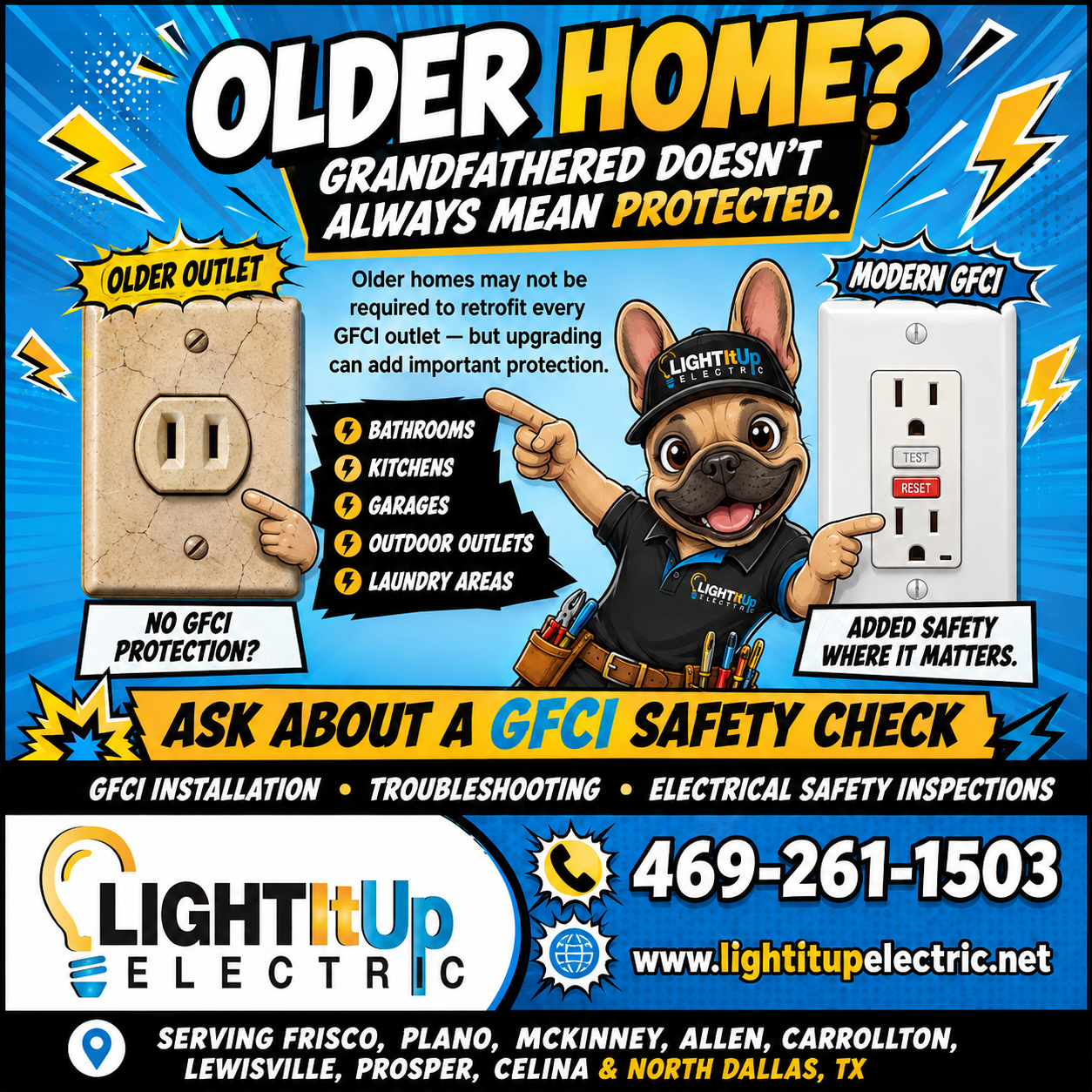
Existing homes generally are not automatically required to retrofit every outlet simply because the National Electrical Code has changed . Electrical requirements usually depend on when the system was installed, whether electrical work is being modified or replaced, local code requirements, and the authority having jurisdiction. But being grandfathered under an older code does not necessarily mean your electrical system offers the level of protection available today. The National Electrical Code establishes minimum safety requirements for electrical installations . As electrical safety standards have evolved, GFCI protection has expanded into more areas of the home. If your older property has never received a comprehensive electrical update, it may be worth having its GFCI protection evaluated. Light It Up Electric provides professional GFCI outlet installation, GFCI breaker installation, electrical troubleshooting, and electrical safety inspections for homeowners and businesses throughout North Texas. Call 469-261-1503 Visit https://www.lightitupelectric.net
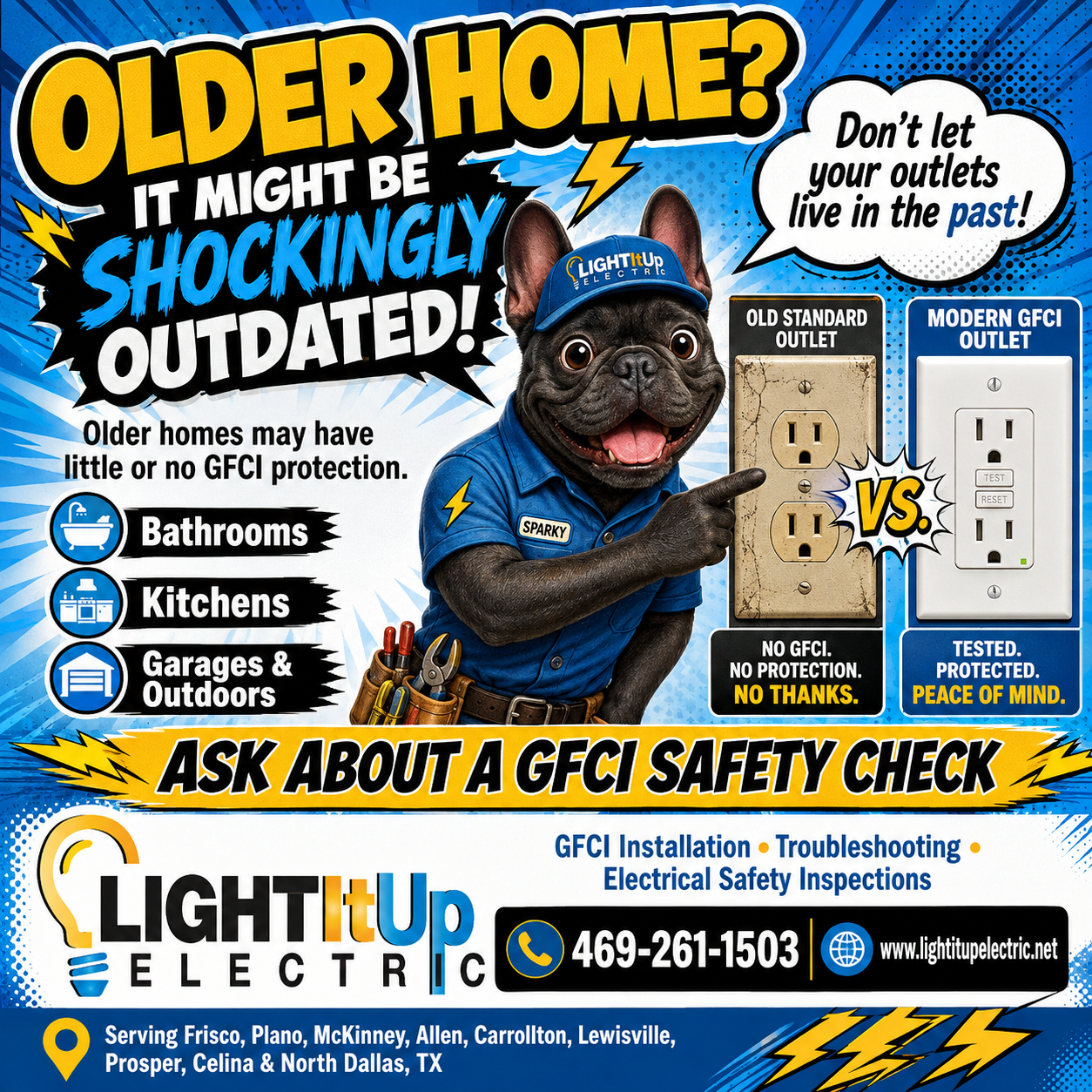
GFCI requirements were added to the National Electrical Code gradually over time. Outdoor receptacles were among the earliest locations to require protection, followed later by bathrooms, garages, kitchens, and other areas. That means many older homes in Frisco, Plano, McKinney, North Dallas, Allen, Carrollton, Lewisville, Prosper, and Celina, TX may still have standard receptacles in locations where modern electrical systems would typically include GFCI protection. If you are unsure whether your home has adequate protection, Light It Up Electric can inspect your electrical system and recommend appropriate upgrades. Call 469-261-1503 Visit https://www.lightitupelectric.net
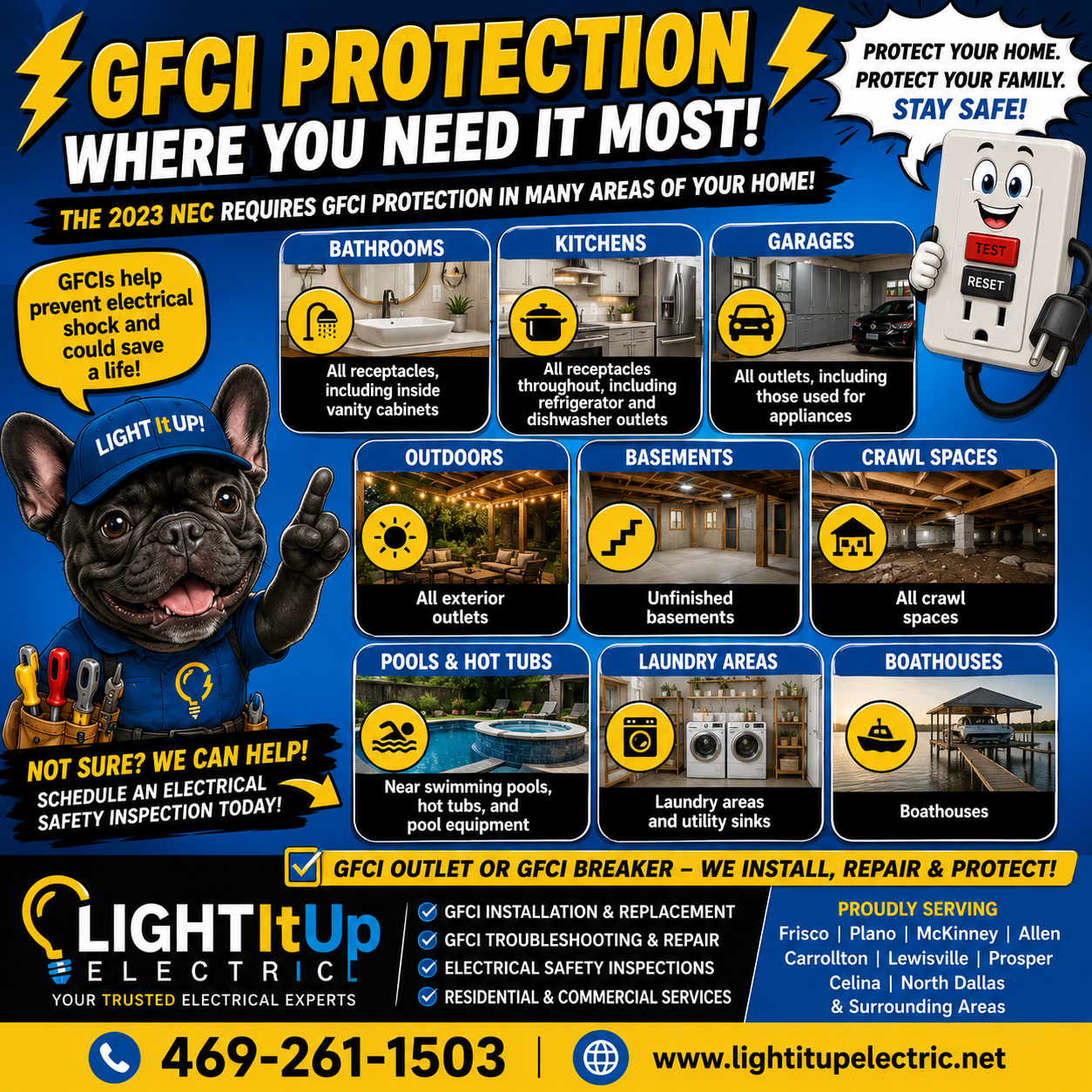
GFCI protection is required in more areas of a modern home than many homeowners realize. Under the 2023 National Electrical Code, GFCI protection for dwelling-unit receptacles applies to numerous locations where electrical shock hazards may be greater, including bathrooms, garages, outdoor areas, crawl spaces, basements, kitchens, areas near sinks, boathouses, laundry areas, and other damp or wet locations. Texas has adopted the 2023 NEC as the statewide minimum electrical standard for covered electrical work , effective September 1, 2023. Local cities can also have amendments and permitting requirements, so the exact requirements for a property may depend on the local authority having jurisdiction. For homeowners and businesses in Frisco, Plano, McKinney, North Dallas, Allen, Carrollton, Lewisville, Prosper, and Celina, TX , Light It Up Electric provides professional GFCI outlet installation, GFCI breaker installation, electrical troubleshooting, and electrical safety inspections . Call Light It Up Electric at 469-261-1503 Visit https://www.lightitupelectric.net
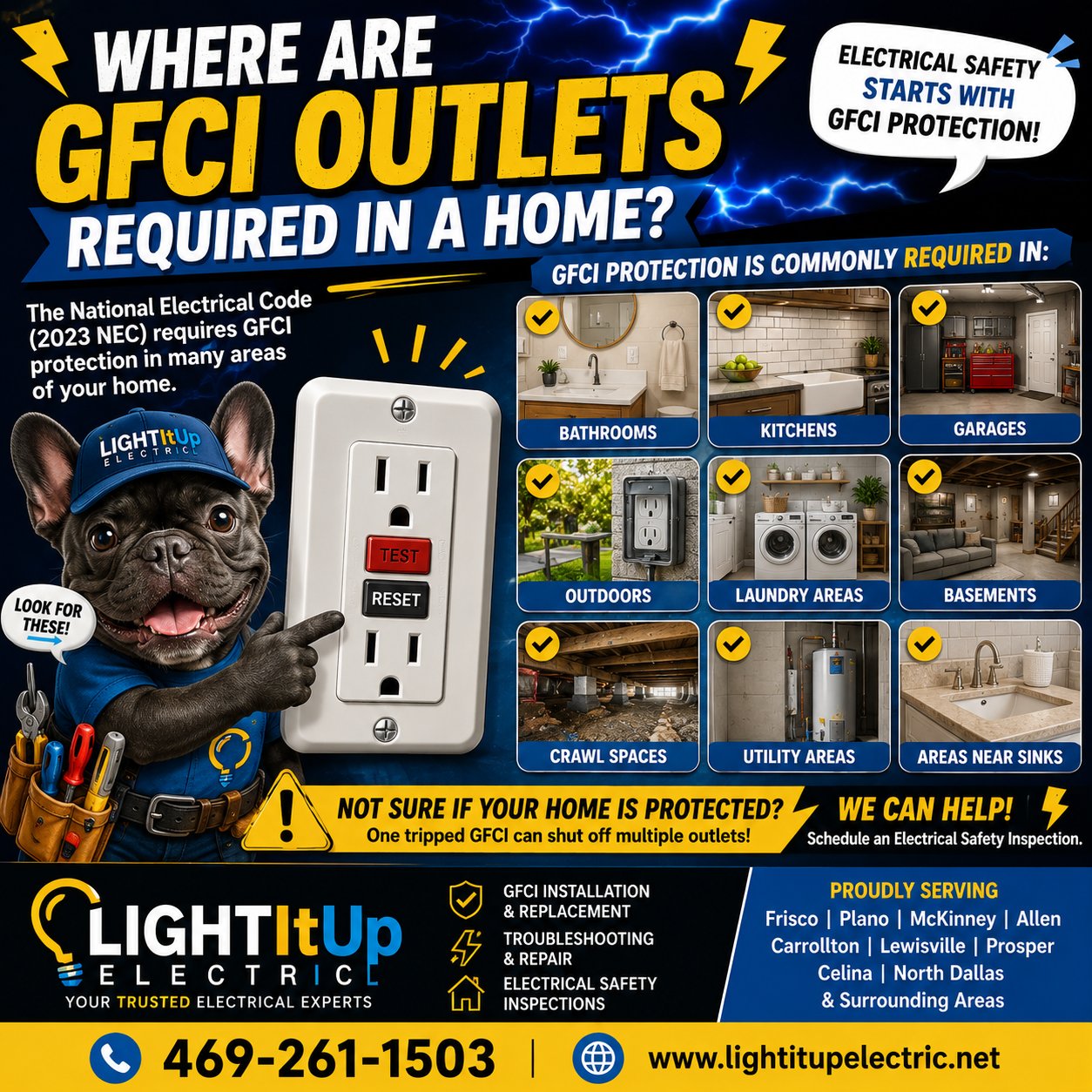
The National Electrical Code (NEC) establishes minimum electrical safety standards for GFCI protection. Texas currently uses the 2023 National Electrical Code as the minimum standard for electrical work covered by state law , effective September 1, 2023. Municipalities may also have local amendments and permitting requirements, so the exact requirements for a property can depend on the local jurisdiction. For homeowners and businesses in Frisco, Plano, McKinney, North Dallas, Allen, Carrollton, Lewisville, Prosper, and Celina, TX , Light It Up Electric provides professional GFCI outlet installation, GFCI replacement, electrical troubleshooting, and electrical safety inspections . Call Light It Up Electric at 469-261-1503 Visit https://www.lightitupelectric.net
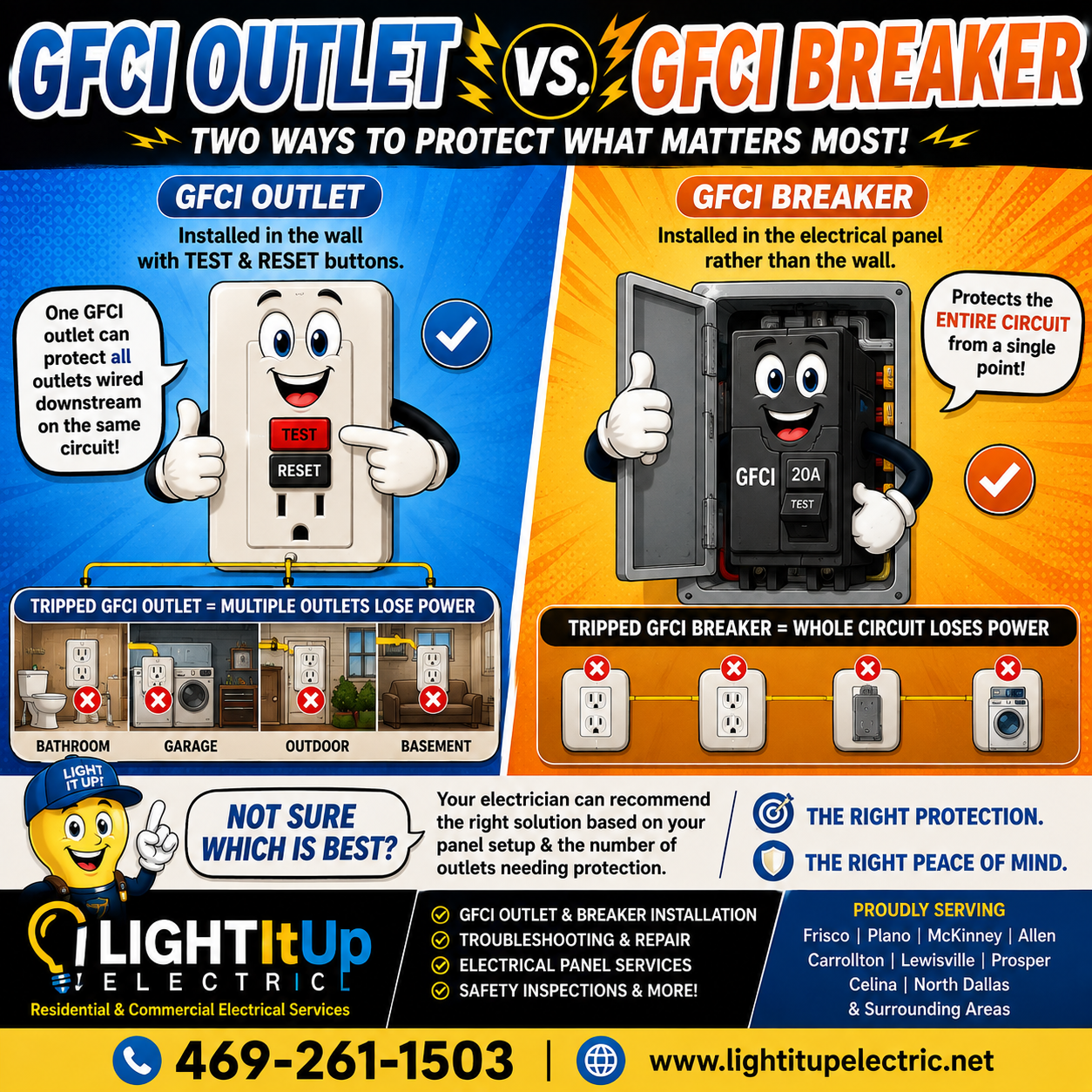
A GFCI breaker provides ground-fault protection from the electrical panel instead of from an individual wall outlet. Unlike a GFCI receptacle with TEST and RESET buttons, a GFCI breaker is installed directly in the breaker panel and can protect the entire branch circuit from one central location . For homeowners and businesses in Frisco, Plano, McKinney, North Dallas, Allen, Carrollton, Lewisville, Prosper, and Celina, TX , a GFCI breaker can be an effective solution when multiple outlets or devices on the same circuit require ground-fault protection. Need help deciding between a GFCI outlet and a GFCI breaker ? Call Light It Up Electric at 469-261-1503 or visit https://www.lightitupelectric.net .
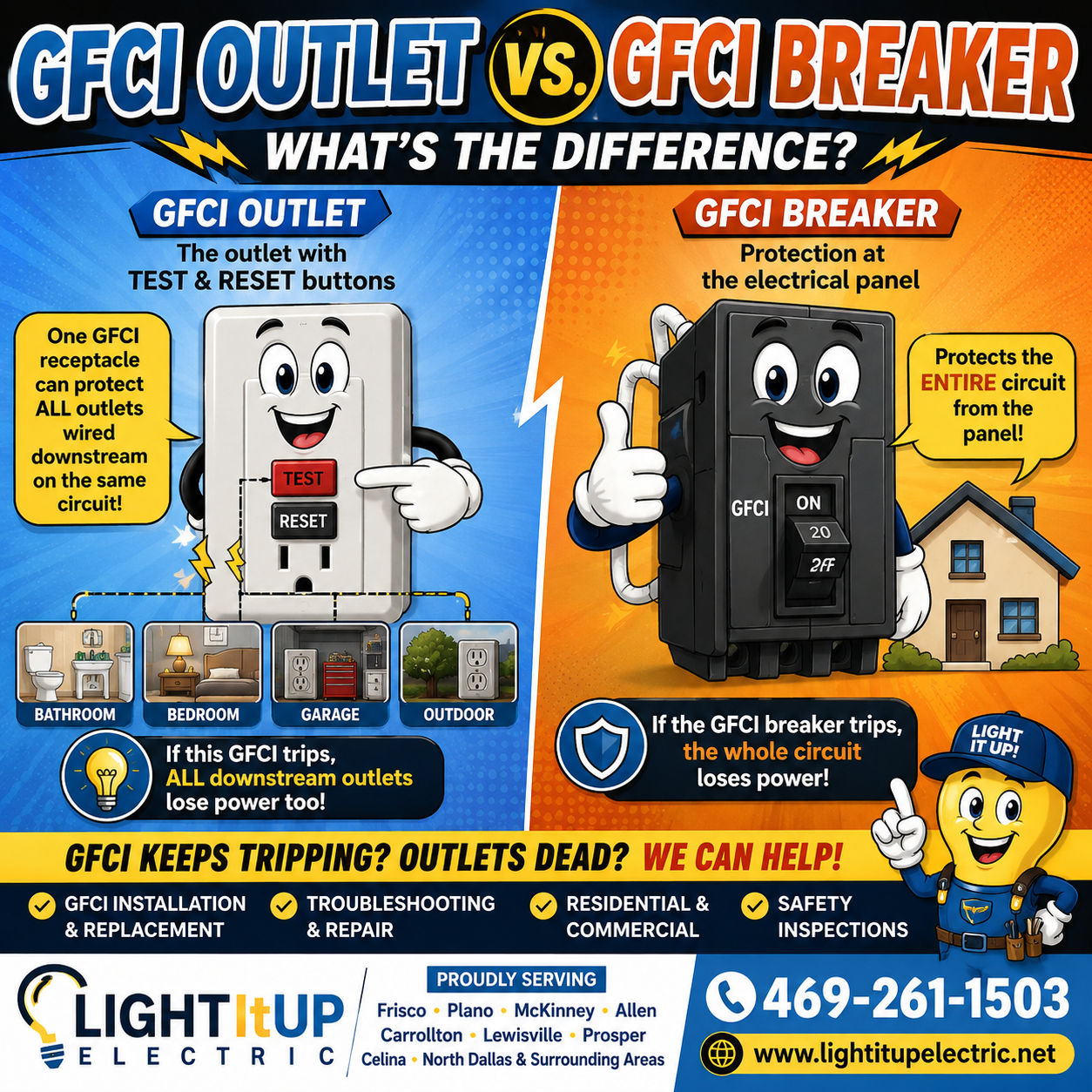
GFCI Outlet vs. GFCI Breaker: What’s the Difference? When homeowners or business owners hear the term GFCI protection , they often think of the familiar outlet with TEST and RESET buttons . But GFCI protection can also be provided by a circuit breaker installed inside the electrical panel. Both are designed to help reduce the risk of electrical shock, but they protect circuits in different ways. For homeowners and businesses in Frisco, Plano, McKinney, North Dallas, Allen, Carrollton, Lewisville, Prosper, and Celina, TX , understanding the difference between a GFCI outlet and a GFCI breaker can make electrical troubleshooting much easier.
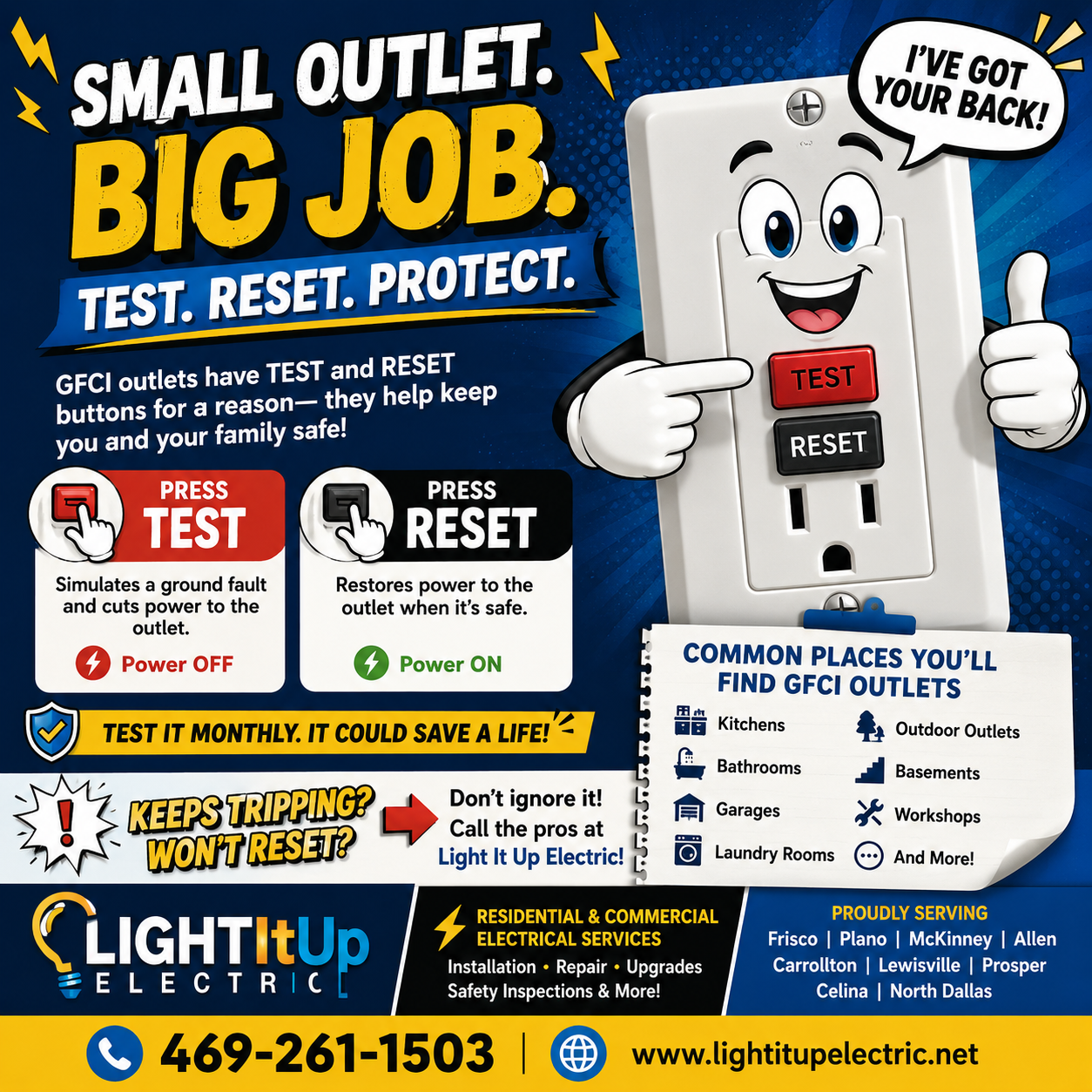
GFCI Outlet TEST & RESET Buttons: What They Do and Why They Matter If you have ever noticed the TEST and RESET buttons on an electrical outlet , you are looking at an important safety feature called a GFCI receptacle , or Ground-Fault Circuit Interrupter.


